CV
Curriculum vitae
Kyle M. LeClair
Design Engineer II · Electrical and Electromechanical Design · Manufacturing Engineering
Fort Worth, Texas · contact@kyleleclair.com
As Design Engineer II, I hold electrical and mechanical design and signature authority for assigned safety-related hardware. My experience spans original nuclear protection and monitoring electronics, aerospace development hardware, Marine aviation test engineering, industrial instrumentation, and the development of manufacturing capability.
My work includes complete design ownership of a reactor trip system, original circuit and rigid-flex assemblies, electromechanical signal-integrity investigation, computational engineering tools, and technical methods used in manufacturing, inspection, and maintenance. Independent research addresses celestial navigation, optical measurement, and precision timing.
Resume · LinkedIn · Engineering portfolio · Research · Software and tools
Professional appointments
Mirion (New Nuclear)
- Design Engineer II
- April 2026–present
- Engineering Technician / Designer
- August 2022–March 2026
My nuclear engineering and motion-related work was subject to export controls. Public descriptions are limited to professional responsibilities and outcomes. Project-specific technical data are withheld.
Technical lead and liaison across engineering, manufacturing, quality, test, and laboratory functions. Full electrical and mechanical design and signature authority for assigned safety-related hardware in the Design Engineer II role.
Contributions across both appointments include:
- Complete design ownership of a reactor trip system and engineering contributions to neutron monitoring and protection equipment.
- Original circuit and rigid-flex board design, prototype bring-up, and development and execution of board-level acceptance tests.
- High-reliability harness design and controlled release of electrical and mechanical design packages for fabrication, inspection, and integration.
- Harness-fabrication and large-assembly integration cells, a combined-system test laboratory, automated circuit-card test fixtures, and supporting technical instruction.
- Electromechanical packaging, shielding, seismic wire management, and mitigation of mechanically induced signal noise.
- Manufacturing-cost and sourcing analysis, production-flow evaluation, controlled procedures, technical training, and corrective-action implementation.
- Factory acceptance testing, field commissioning, and resolution of integration findings with laboratory and production teams.
Lockheed Martin — Missiles and Fire Control
- Prototyping Electrical Technician, Electronics Development Laboratory
- February 2021–July 2022
Supported prototype hardware fabrication, electrical integration, and verification for PAC-3 and hypersonic-development programs. Contributed to more than 100 flight-grade cable assemblies and nine complex telemetry and test-cabinet assemblies.
Integrated RF and high-speed interconnects, power distribution, signal conditioning, and PXI instrumentation. Performed electrical checks, maintained as-built documentation, and worked with design and test teams to resolve assembly and interface discrepancies.
United States Marine Corps
- Non-Commissioned Officer / Aviation Electrician (MOS 6432)
- February 2015–February 2020
I led work-center personnel, maintenance production priorities, and technical training. Developed original diagnostic equipment, restored complex aircraft-support test systems, and performed advanced electrical and electromechanical fault isolation.
As Noncommissioned Officer in Charge (NCOIC) for additive manufacturing, I established the Marine Corps’ first overseas aviation additive manufacturing work center at MCAS Futenma with MALS-36. Developed procedures, inspection controls, training syllabi, and personnel qualification requirements. Taught a class for the Commanding General of the 1st Marine Aircraft Wing and his staff.
The curriculum and qualification procedures I developed for the work center helped lay the groundwork for the Marine Innovation Unit.
Served in avionics and airframes inspection roles and accepted maintenance on 300+ flight-essential assemblies.
Worked directly with Building Momentum and 3rd Marine Logistics Group on Deployable Innovation Centers for the Navy and Marine Corps. Integrated workshop capabilities included additive manufacturing, circuit design and manufacturing, networking, fabrication, unmanned aircraft systems, and programming.
Engineered an AH-1W diagnostic test set that reduced average operational-check time from approximately 90 to 10 minutes. Designed the MV-22 emergency egress lighting charger/analyzer, including two custom PCBs and an actively cooled bench interface. Fleet Support Team approval enabled the intermediate-level operational check.
Additional engineering experience
Federal manufacturing instrumentation
U.S. Department of the Treasury project work involving differential-pressure interlock design for VOC-control operations and 5G/LoRa industrial telemetry for equipment-condition monitoring and maintenance planning.
Industrial Differential-Pressure Safety Interlock · Industrial Telemetry for Condition Monitoring and Predictive-Maintenance Support
Independent electronics rework practice
Development of electronics modification and rework methods, technical feasibility criteria, package-specific labor estimation, controlled work records, inspection requirements, and customer quotations.
Independent Electronics Rework and Manufacturing Process Engineering
Research and analytical work
Independent celestial navigation and optical sensing
Investigation of celestial and optical measurements as directional references for aerospace systems. Work encompasses atmospheric effects, celestial geometry, optical instrumentation, mathematical modeling, uncertainty analysis, and computational feasibility, with preliminary embedded and FPGA-based hardware architecture.
Celestial Navigation and Optical Reference Sensing · Optical observations and reference-vector estimation
Experimental precision timing and navigation integrity
Investigation of GNSS-referenced timing, local oscillator behavior, holdover, reference integrity, and timing distribution to optical and inertial sensors. Current work connects system requirements, electronic design, measurement planning, and sensor-integration constraints.
GNSS integrity and precision timekeeping
Defense systems engineering and lifecycle analysis
Authored and defended this study for academic credit at Texas Christian University. Analyzed defense systems engineering, acquisition frameworks, and lifecycle decision-making. Examined 16 core systems-engineering processes and the relationship among requirements, architecture, interface management, configuration control, risk, verification, and validation. Analyzed the evidence expected at SRR, PDR, CDR, TRR, and PRR.
Extended the analysis to mission engineering, systems-of-systems integration, modular open systems architecture, digital engineering, reliability, manufacturing readiness, and lifecycle affordability.
Defense Systems Engineering: Lifecycle and Technical-Management Research · Read the TCU presentation
Electronic reliability prediction
Developed a Python/Jupyter and Excel workflow for MIL-HDBK-217F Appendix A parts-count predictions. Implemented input validation, traceable failure-rate selection, failure-rate aggregation, predicted MTBF, calculation reporting, and verification documentation.
Electronic Reliability Prediction and MTBF Analysis Toolkit · Open the MTBF tool
Waveform reconstruction and spectral analysis
Developed a MATLAB workflow to recover approximate voltage–time information from archived oscilloscope images when original numerical files were unavailable. Used trace extraction, scale interpretation, interpolation, and Fourier analysis to support diagnostic review, with interpretation bounded by the information retained in the images.
Oscilloscope Waveform Reconstruction and Fourier Analysis
Dimensional analysis and component selection
Created Python tools to compare component geometry, manufacturer dimensions, interface compatibility, and assembly constraints. Applied the tools alongside CAD to support component selection and electromechanical fit assessment.
Python Tools for Dimensional Compatibility and Component Selection
Manufacturing methods and technical research
Developed technical guidance on high-reliability coaxial interconnects, including cable geometry, impedance, attenuation, shielding, connector compatibility, termination practices, and acceptance criteria. Applied quantitative methods to manufacturing flow, labor estimation, sourcing, and electronics rework planning.
High-Reliability Coaxial Interconnect Engineering and Manufacturing Guidance
Technical methods and engineering documentation
Produced technical resources that translate engineering requirements and analysis into repeatable work:
- Circuit and electromechanical design packages, system interconnection drawings, manufacturing definitions, and controlled as-built records.
- Board-level acceptance procedures, automated fixture requirements, instrumented test instructions, and calibration-related documentation.
- Coaxial interconnect guidance, supplier process requirements, assembly instructions, inspection guides, standard operating procedures, and technical bulletins.
- Reliability calculation reports, computational workflows, dimensional comparison methods, and manufacturing cost and process analyses.
- Training syllabi, qualification requirements, technical presentations, and instruction for technicians, inspectors, and maintenance personnel.
Technical competencies
Circuit design and protection hardware
Safety-related circuit design, functional requirements, hardware interface definition, component selection, schematic capture, prototype bring-up, and verification.
PCB and circuit-assembly development
Multi-card systems; rigid-flex PCB/PCCA design; schematic capture; PCB layout; interconnect definition; physical packaging; prototype assembly and bring-up; board-level acceptance methods; automated circuit-card test fixtures.
Electromechanical behavior and integration
Microphonic signal disturbances; material and component-support selection; filter and shielding assemblies; enclosure geometry; connector access; mechanical retention; seismic wire routing; dimensional compatibility; assembly sequence; inspection and service access.
RF, coaxial, and electrical interconnects
High-reliability harness design; RF and high-speed data interconnects; MIL-DTL-38999 interfaces; characteristic impedance and attenuation considerations; dielectric and shielding integrity; connector compatibility; crimp, solder, and compression terminations; bend radius; strain relief; controlled fabrication and inspection.
Systems requirements and engineering control
Requirements interpretation; interface definition; safety-related logic; redundancy, diversity, and segregation; configuration control; controlled release; root-cause investigation; corrective and preventive action; technical review and lifecycle analysis.
Test, measurement, and diagnostic methods
Custom diagnostic equipment; breakout interfaces; rack and cabinet integration; PXI instrumentation; continuity and insulation-resistance testing; oscilloscope-based analysis; signal generation; precision resistance measurement; circuit fault isolation; calibration-method evaluation; factory acceptance; commissioning.
Manufacturing capability and process engineering
Design for manufacturing and assembly; cell and tooling development; integrated test laboratories; supplier requirements; conformal-coating process controls; assembly and inspection instructions; electronic assembly and rework; ESD, FOD, HAZCOM, and tooling controls.
Manufacturing economics and technical feasibility
Operation-time and handling analysis; direct-labor estimation; sourcing alternatives; lead-time and fabrication constraints; production bottlenecks; manufacturing risk; package-dependent rework estimates; thermal and access considerations; inspection effort and scope definition.
Additive manufacturing and reverse engineering
CAD-supported fabrication; reverse engineering; three-dimensional scanning; additive manufacturing; deployable prototyping; controlled technical data; manufacturing instructions; personnel qualification and inspection controls.
Computational engineering
Python and Jupyter; MATLAB and GNU Octave; Excel-based engineering models; parts-count reliability prediction; traceable parameter selection; failure-rate aggregation and predicted MTBF; waveform digitization; interpolation and Fourier analysis; dimensional and component comparisons.
Industrial instrumentation and communication
Differential-pressure sensing and interlock design; VOC-control applications; equipment interface integration; 5G and LoRa telemetry; condition-monitoring data acquisition; communication and operational constraints.
Technical leadership and knowledge transfer
Work-center production priorities; cross-functional technical liaison; technician and inspector instruction; maintenance training; qualification requirements; engineering guidance; technical bulletins; controlled documentation; presentation and defense of technical studies.
Engineering tools
- Schematic capture and circuit simulation
- I use Altium Designer and KiCad for schematic capture and printed circuit board layout, LTspice for circuit simulation, and SOLIDWORKS Electrical for wiring and interconnection drawings. Together these tools carry an electrical design from the circuit on the schematic to the board and harness interfaces that must fit at assembly.
- Mechanical CAD and reverse engineering
- At MALS-24, I learned to use a 3D scanner to capture part geometry and SOLIDWORKS to reconstruct it as an editable model. In deployed manufacturing work, those models supported prototype fabrication, inspection planning, and technical data packages. My later electromechanical work uses CAD to evaluate component fit, connector access, and assembly sequence.
- Python, Jupyter, and Excel
- I developed a parts-count workflow that takes a component population from an Excel workbook through handbook rate selection, failure-rate aggregation, and predicted MTBF. The output preserves the contribution of each population for review. I also wrote Python tools to compare manufacturer dimensions and screen components for interface compatibility before detailed CAD review. Reliability workspace · Dimensional analysis project
- MATLAB and GNU Octave
- I use these environments for numerical and signal analysis. In MATLAB, I wrote a program to recover an approximate voltage–time record from an oscilloscope image. It estimates the visible trace position, maps pixels to physical units, and computes a single-sided amplitude spectrum. The archived image, reconstructed waveform, spectrum, and complete script can be examined together. Waveform reconstruction
- Automated test and acquisition
- My test work includes LabVIEW, PXI instrumentation, breakout assemblies, and custom test fixtures. In aerospace development I integrated PXI instrumentation with signal conditioning and cabling in test cabinets. Restoring an Eclypse ESATS in the Marine Corps gave me a maintenance perspective on the same problem: how to determine whether the commanded test and the measurement at the physical interface agree. ESATS restoration
- Bench and electrical measurement
- Oscilloscopes, function generators, digital multimeters, and calibrated test equipment support prototype bring-up and fault isolation. I used independent measurements to investigate test-station behavior and evaluated resistance-measurement practice when a revised calibration method produced inconsistent results. On fabricated harnesses, continuity and insulation-resistance measurements answered separate questions about connection and isolation. Calibration-method investigation
- Fabrication and inspection
- My equipment experience includes additive manufacturing systems, electronics assembly and rework tools, and tooling for crimped, soldered, and compression-terminated interconnects. At Futenma, I connected CAD and fabrication equipment to written operating procedures, inspection criteria, and personnel qualifications. Expeditionary manufacturing work center
- Configuration control and technical communication
- My engineering information tools include Windchill for controlled product records and GitLab for versioned engineering work. I use Excel to organize calculations and evaluate production flow, Word to prepare procedures and inspection guidance, and PowerPoint to teach technical methods and present design and lifecycle reviews.
Public calculators and engineering methods
Education
Tarrant County College
Texas Christian University
Technical study and professional development
Additional technical study: additive manufacturing — Johns Hopkins Applied Physics Laboratory; reverse engineering — Penn State Applied Research Laboratory; Department of Defense acquisition and systems engineering.
Military technical training
Aviation electrical foundations · Pensacola, Florida, 2015
After Marine Combat Training at Camp Geiger, I attended Marine Avionics Technician School and Aviation Electrician’s Mate School in Pensacola. My coursework included Electrician Apprentice Technical Training and the Aviation Electrician’s Mate Class A1 course. That electrical foundation preceded my specialization in rotary-wing aircraft instruments and flight-control equipment.
Rotary-wing avionics and intermediate maintenance · Camp Pendleton, 2016
At Rotary Wing Avionics Maintenance School, I earned MOS 6432, Aircraft Electrical/Instrument/Flight Control Systems Technician. My March 2016 coursework covered the aircraft equipment and the ground equipment used to evaluate it.
- Flight controls and instruments. Intermediate maintenance of CH-53 automatic flight control systems and H-1 automatic flight control and stability control augmentation systems.
- Aircraft electrical systems and test stands. Rotary-wing electrical systems intermediate maintenance and Aircraft Engine Component Test Stand Operational Maintenance. I later applied that training to the restoration of a stand that supported aircraft electrical generating equipment.
- Aviation batteries. Maintenance of lead-acid, nickel-cadmium, and lithium batteries. My later MV-22 charger/analyzer project drew on that background in aircraft electrical power and battery maintenance.
- Other electrical assemblies. Intermediate maintenance coursework on armament-control and turret systems.
Fleet training and inspection
I completed Avionics Corrosion Control in August 2016. While assigned to MALS-24, I also cross-trained with Marine Light Attack Helicopter Squadron 367 in organizational-level maintenance. Seeing how discrepancies appeared on the aircraft informed my work on assemblies sent to the intermediate shop. My subsequent inspection assignments included Collateral Duty Inspector and Collateral Duty Quality Assurance Representative duties.
Advanced manufacturing and aviation logistics
As one of MALS-24’s first additive manufacturing trainees, I attended the Headquarters Marine Corps Aviation Logistics innovation summit at MCAS New River in 2018. The summit introduced additive manufacturing, cold spray, and laser ablation. Through Tactical Fabrication training with III Marine Expeditionary Force in Hawaiʻi and training for 1st Marine Aircraft Wing maintenance units, I learned to capture physical geometry with a 3D scanner and reconstruct it in SOLIDWORKS. I also attended the Unmanned Logistics System Air Warfighter Workshop with I Marine Expeditionary Force at Camp Pendleton.
I returned to MALS-24 as an instructor and helped establish its fabrication laboratory. Later, at MCAS Futenma, I developed the syllabus, operating procedures, inspection requirements, and qualification standards for the deployed work center.
Certification and workmanship
- IPC J-STD-001 certification.
- Lean Six Sigma Green Belt.
- Class 3 electronic assembly and rework experience.
- Applied workmanship and acceptance standards: IPC-A-610, IPC/WHMA-A-620, IPC-7711/7721, and NAVAIR 01-1A-505.
- Internal engineering trainer; development of technical instruction for manufacturing, inspection, and maintenance personnel.
Awards and recognition
Paul G. Vess Award — Marine Corps Avionics Marine of the Year
I received the Marine Corps Aviation Association’s Paul G. Vess Award for my work in 2018 as a Corporal and Collateral Duty Inspector with Marine Aviation Logistics Squadron 24. I designed and built an AH-1W caution advisory test set that reduced the average operational check from 90 minutes to 10. The citation also recognized my MV-22 emergency egress lighting test equipment and my commitment to helping other Marines succeed. The nomination placed both instruments in a wider record of self-directed engineering study, repair of shop test stations, inspection responsibility, and instruction. I helped establish an additive manufacturing laboratory in Hawaiʻi and taught skills I had first learned as one of the squadron’s initial trainees. Before I received the award, I was already serving as NCOIC for additive manufacturing. The curriculum I developed in that role helped lay the groundwork for the Marine Innovation Unit.
Award record, photographs, and citation · Official award announcement · Marine Corps feature · Official photograph
Navy and Marine Corps Commendation Medal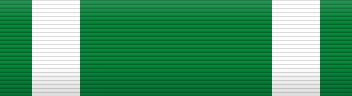
I received the Commendation Medal for sustained service from March 2016 through January 2020. During that tour I helped restore intermediate-level maintenance on avionics assemblies and aircraft electrical generating equipment. In the additive manufacturing program I prepared more than ten technical data packages for review across multiple work centers and squadrons. My work combined original test equipment, restoration of shop diagnostic capability, technical instruction, and quality assurance. Across that period I progressed from diagnosing individual assemblies to restoring the stations used to assess them, designing original bench equipment, and training others in its use. The AH-1W caution advisory test set illustrates the practical outcome. It gave another technician a repeatable way to exercise the system and isolate a fault during an operational check.
Navy and Marine Corps Achievement Medal — Impact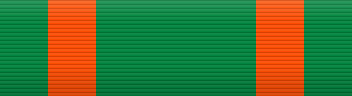
During deployment with Marine Aviation Logistics Squadron 36, I established the aviation additive manufacturing work center at MCAS Futenma. The work included writing operating procedures, defining inspection and qualification requirements, and teaching personnel to use the equipment. I also instructed the 1st Marine Aircraft Wing Commanding General and staff on the capability. The Futenma deployment was recognized separately from the sustained-service Commendation Medal. That work extended my earlier experience helping establish the laboratory in Hawaiʻi. At Futenma I was responsible for giving the new work center procedures that another Marine could learn, apply, and inspect. The impact award recognized the establishment of a manufacturing capability that other Marines could operate and sustain.
Expeditionary additive manufacturing at MCAS Futenma
1st Marine Aircraft Wing Avionics Marine of the Year
The 1st Marine Aircraft Wing recognized my avionics work at the wing level. I was serving with Marine Aviation Logistics Squadron 24, where my duties combined electrical fault isolation, inspection of aircraft components, and instruction of other technicians.
Service decorations and qualifications
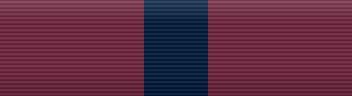

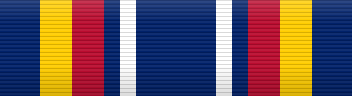
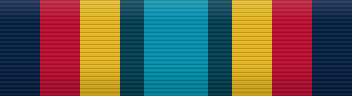
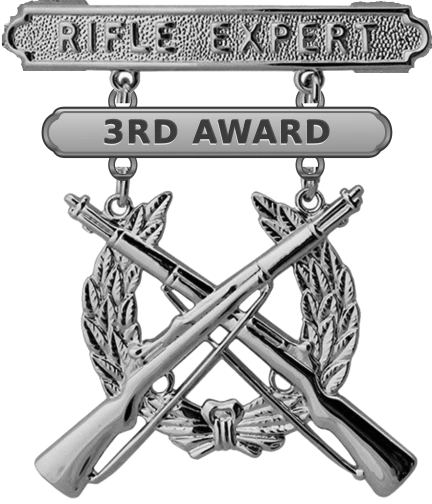
Navy and Marine Corps Commendation Medal, Navy and Marine Corps Achievement Medal, Marine Corps Good Conduct Medal, National Defense Service Medal, Global War on Terrorism Service Medal, Sea Service Deployment Ribbon, Marine Corps Rifle Expert Qualification Badge (Third Award).
State recognition
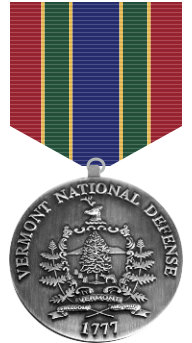
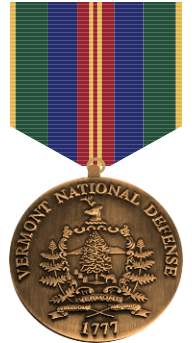
Phi Theta Kappa
In October 2022, I was inducted into Phi Theta Kappa, which recognizes academic achievement among community college students.
SALUTE Veterans National Honor Society
I am a member of SALUTE, which honors student veterans for their service and academic achievement.
Letters of Appreciation
- General Robert B. Neller, Commandant of the Marine Corps
- Lieutenant General Steven R. Rudder, Deputy Commandant for Aviation
- Lieutenant General Michael G. Dana, Deputy Commandant for Installations and Logistics
My service record includes a Certificate of Appreciation.
Professional experience · Engineering portfolio · Research · Software and tools · Resume · LinkedIn