Deployable Innovation Centers
Expeditionary prototyping, electronics development, and fabrication for the U.S. Navy and Marine Corps.
Manufacturing Science & Quality Engineering
- Role
- Development and technical collaboration
- Organizations
- Building Momentum and 3rd Marine Logistics Group
- Disciplines
- Additive manufacturing, electronics, networking, fabrication, unmanned aircraft systems, and software
Overview
I worked directly with Building Momentum and 3rd Marine Logistics Group (3rd MLG) to develop deployable innovation centers for the U.S. Navy and Marine Corps. Each center brought six capabilities into a transportable engineering workspace. These included additive manufacturing, circuit design and manufacturing, networking, fabrication, unmanned aircraft systems (UAS), and coding.
The objective was to put design and prototyping tools within reach of the people who encountered a problem and understood its constraints. In a common workshop, the person specifying a part could examine the first physical version, explain where it interfered with another component, and take that observation back to the design. The same principle applied when a problem crossed from mechanical fit into wiring or software behavior.
Engineering problem
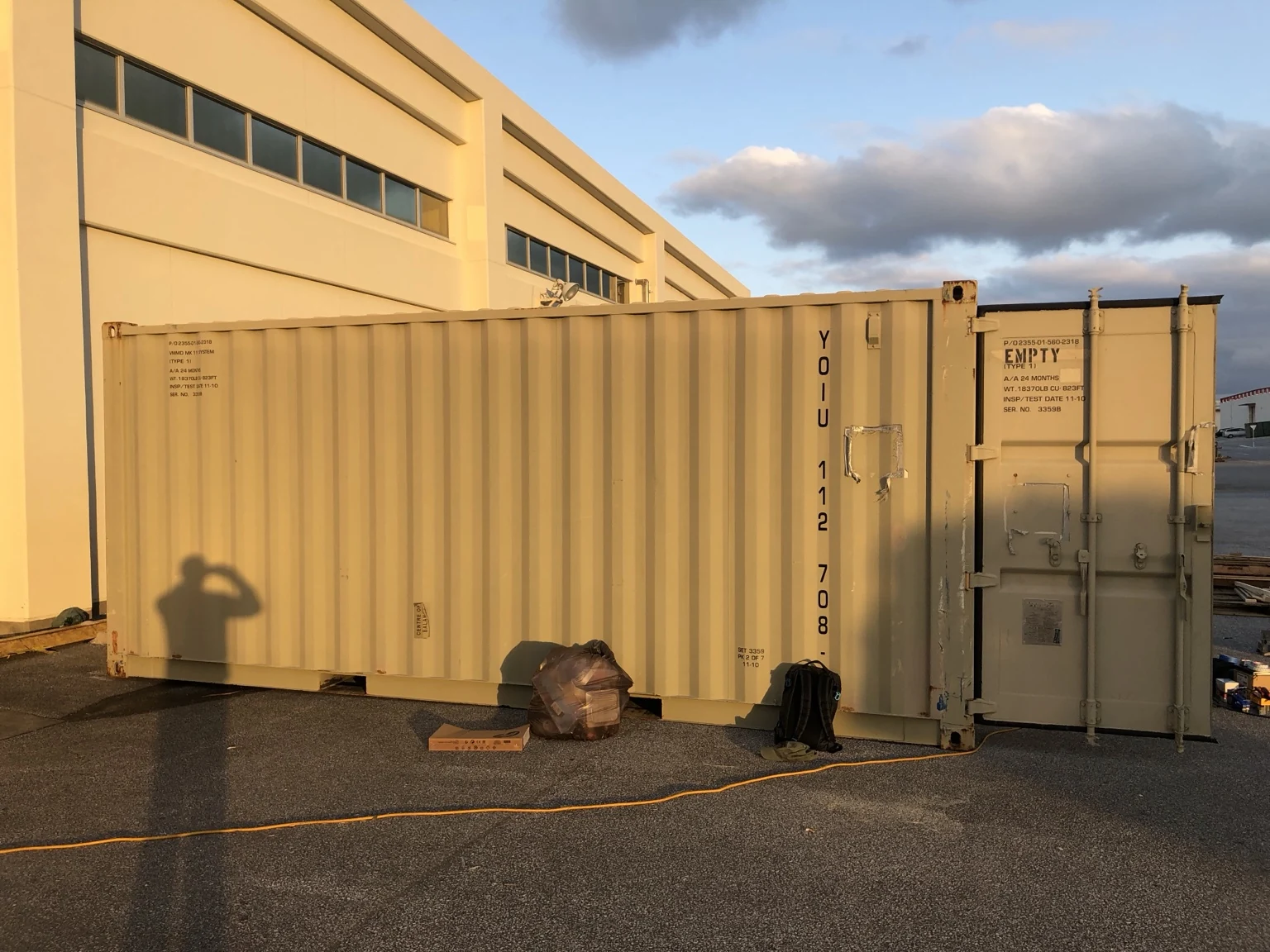
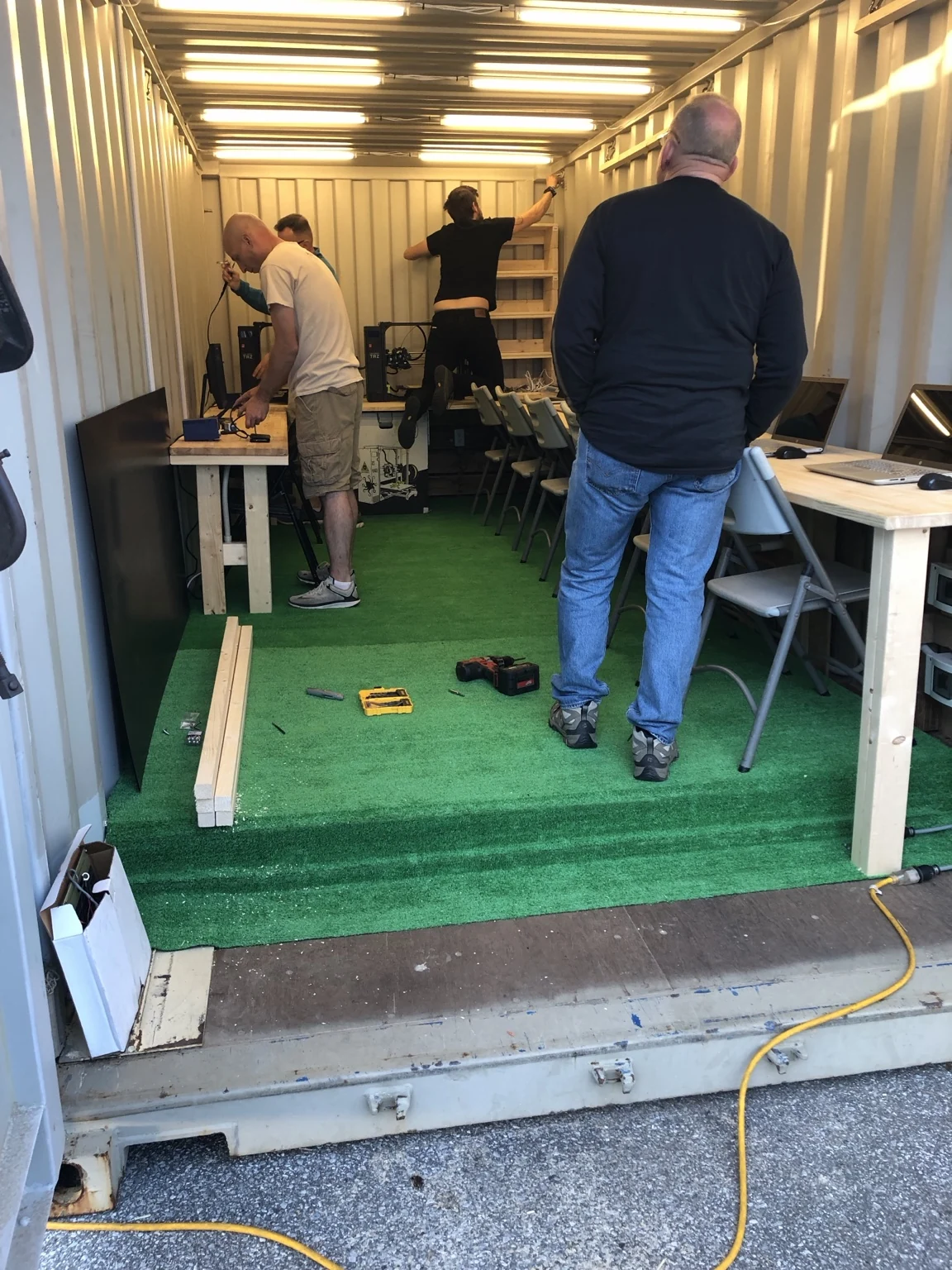
A shipping container sets the floor area, door width, and overhead clearance available to a workshop. Inside that envelope, the layout has to accommodate people as well as equipment. A bench needs space for the assembly under investigation, access to its connections, and room to make a measurement or change a part. Computing stations, lighting, power, and storage all compete for that same space.
The harder question was how to keep a prototype accessible as the work moved between disciplines. An enclosure might fit the initial mechanical design, yet leave too little room for a connector once the circuit was installed. If fabrication, electronics, and computing are within reach of the same bench, the team can examine that interference on the assembled hardware, revise the geometry, and check the result.
My work
I contributed to the development effort with Building Momentum and 3rd MLG from the perspective of a Marine aviation maintainer. In maintenance, the condition that first draws attention to a problem may be visible at one interface even when its cause lies elsewhere. A workspace that supports mechanical inspection, circuit development, and software changes gives the people doing the work a way to follow that evidence.
My experience establishing the Marine Corps’ first overseas aviation additive manufacturing work center at MCAS Futenma informed that perspective. There, my responsibilities included procedures, training, qualification, and inspection. I brought to the deployable centers an appreciation of what makes equipment usable by the next person, including accessible work surfaces, a clear view of the assembly, and working methods that can be taught and repeated.
Integrated capabilities
The six capabilities supported different decisions within the same development effort. Fabrication could answer a question about fit while the circuit and software established how the assembled prototype behaved.
| Capability | Technical scope | Engineering purpose |
|---|---|---|
| Additive manufacturing | Digital design and fabrication of prototype geometry. | Make physical forms available for fit, interface, and design evaluation. |
| Circuit design and manufacturing | Electronic circuit development, prototyping, and construction. | Connect electrical function to a physical implementation that can be evaluated with the rest of a prototype. |
| Networking | Connectivity between computing resources and devices. | Support the exchange of digital information and integration of connected equipment. |
| Fabrication | Construction and modification of physical prototype elements. | Translate mechanical concepts into parts and assemblies that can be examined and revised. |
| Unmanned aircraft systems | UAS development and integration capability. | Bring mechanical, electrical, and software considerations together in an applied systems context. |
| Coding | Software development and embedded programming. | Define prototype behavior, implement control logic, and support technical experimentation. |
A remotely operated vehicle for casualty search
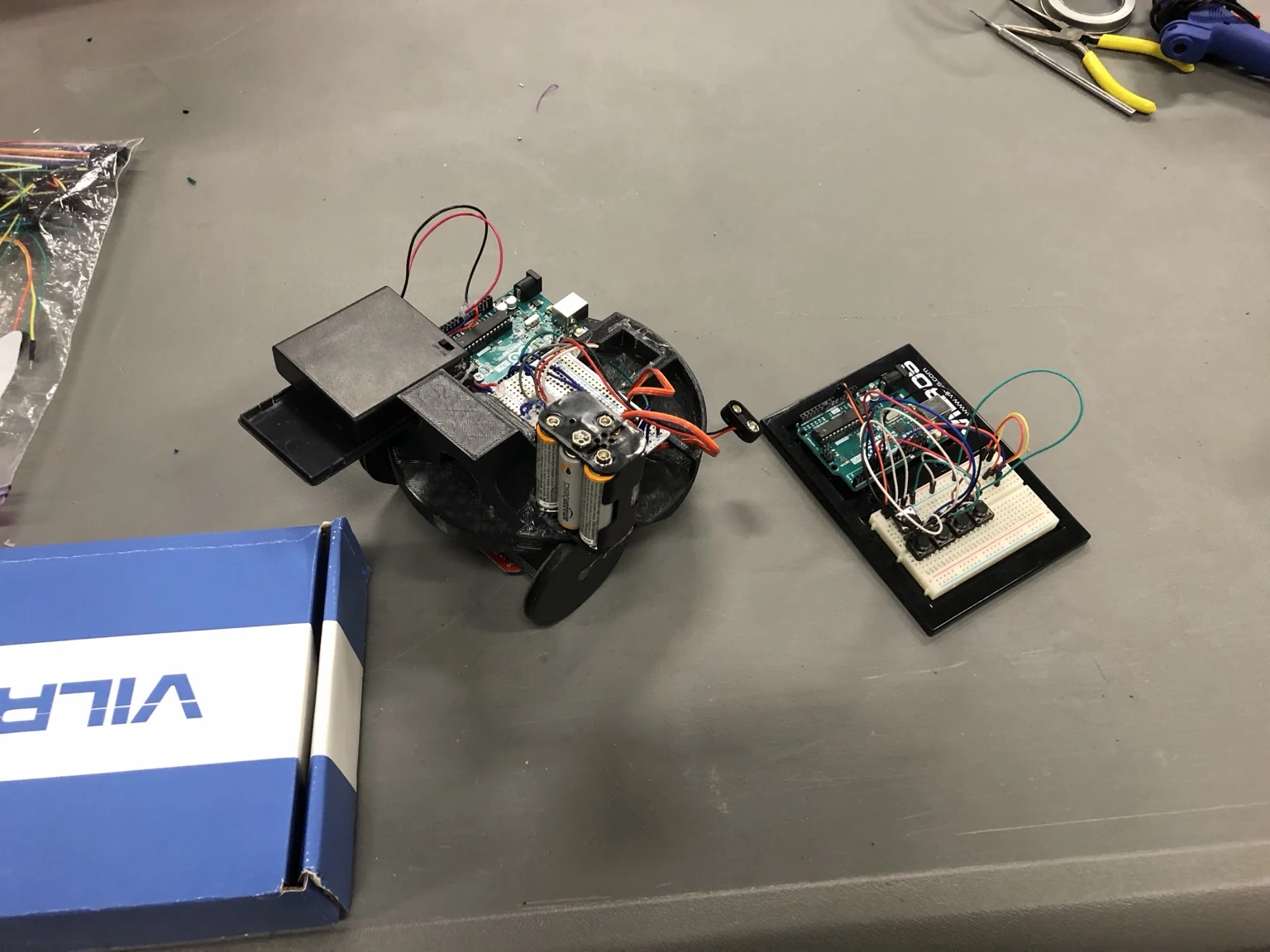
One example of what the work center could produce was a wirelessly controlled ground vehicle intended to help responders locate casualties inside a warehouse during a chemical, biological, radiological, or nuclear (CBRN) incident. The design premise was to let an operator direct the search vehicle from outside the potentially hazardous area.
The vehicle and its separate controller brought several workshop capabilities together in one prototype. The chassis carried the onboard electronics, while the controller provided the operator’s means of directing the vehicle. Having both assemblies on the same bench let developers examine the whole control path, from an operator command to the vehicle’s response, and revise the mechanical assembly, circuitry, or code as needed.
A practical sequence begins by defining the behavior to be demonstrated and the constraints on the hardware. The team can then construct the mechanical elements, assemble the circuit, implement the software, and observe the combined result. Observations from the bench guide the next revision. A connector that is difficult to reach calls for a change in geometry. An installed circuit whose behavior has yet to be exercised may call for a change in software.
Development Evidence
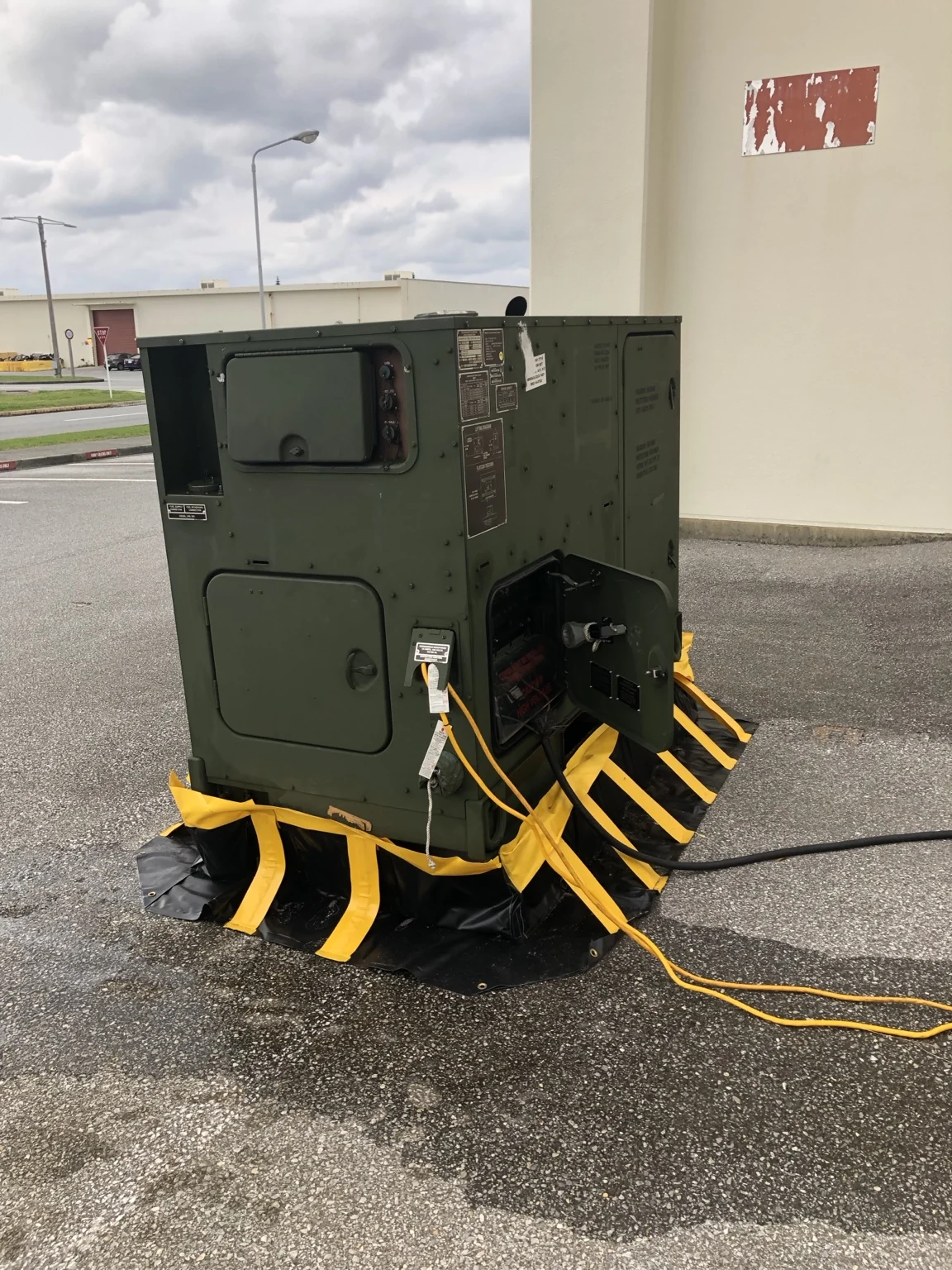
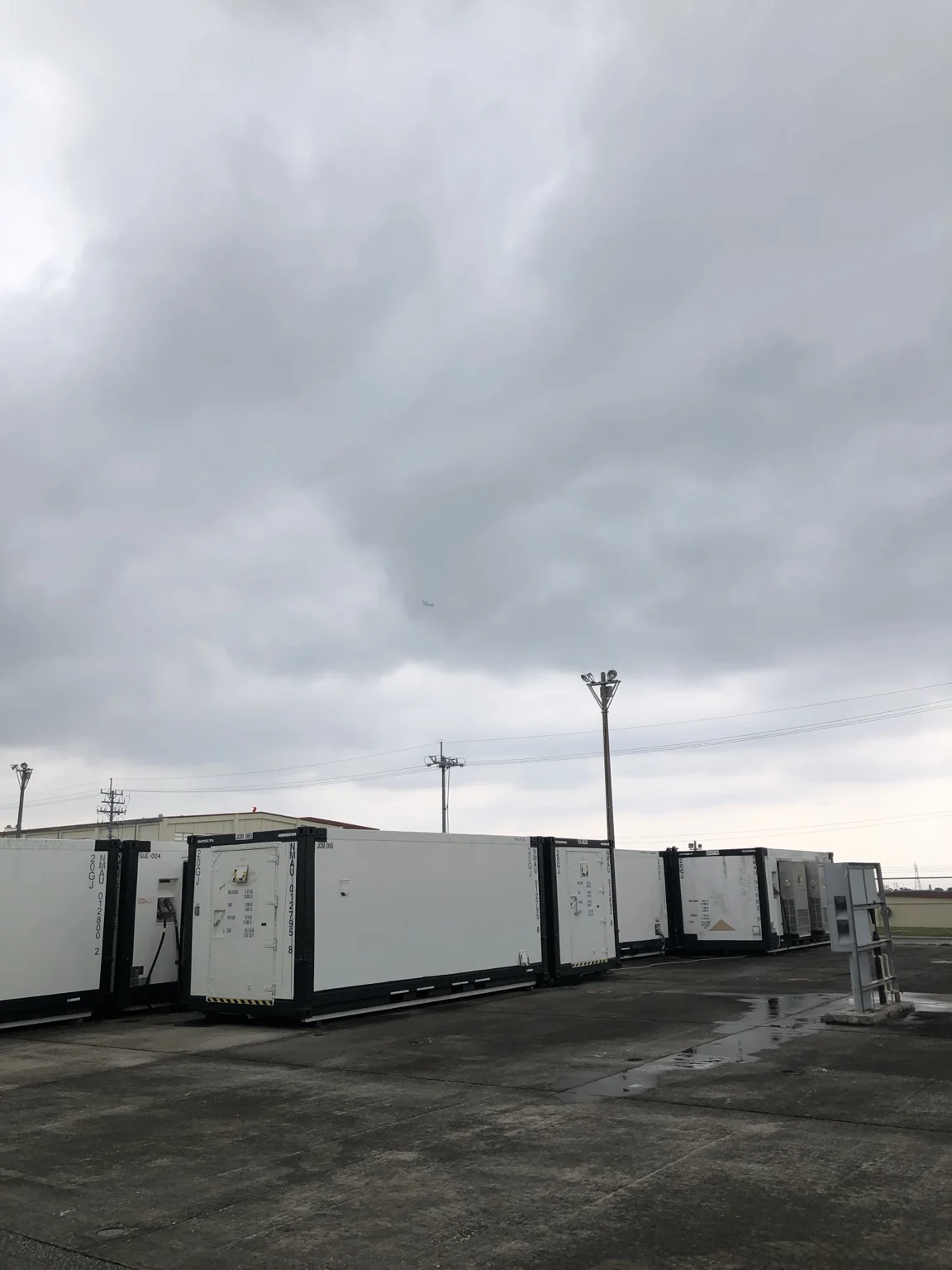
The workstation photographs show where hands-on development took place. The field power equipment and staged modules show the work of supplying and organizing the infrastructure around a transportable workspace.
Outcome and engineering significance
The development effort brought mechanical fabrication, electronics, networking, UAS, and programming into a deployable workshop for Navy and Marine Corps personnel. A physical part, its circuitry, and its software could be considered together while the original problem was still available for inspection.
For a maintainer or technician, that arrangement shortens the distance between describing a problem and showing someone exactly where it occurs. It also gives personnel with different specialties a common object to work from. A fabricator can see the clearance a connector needs, and a programmer can see how a bench assembly responds. That ability to build, examine, and revise the same piece of hardware was the practical purpose of placing these capabilities together.
Public context
Building Momentum describes containerized prototyping laboratories developed for the Marine Corps. A contemporary interview describes how its mobile instruction connected fabrication, electronics, and programming. 1, 2 Marine Corps reporting also documents participation by 3rd MLG personnel in Building Momentum training. 3
References
- Building Momentum. Delivered projects and containerized prototyping laboratories.
- Bantam Tools. How Building Momentum Uses Our Desktop CNC Machines to Teach Problem Solving. June 26, 2018.
- III Marine Expeditionary Force. Marine discusses using robots to fight. December 2019.
Technical areas
Deployable engineering workspaces, multidisciplinary prototyping, electronics development, digital fabrication, and technical capability development.