Paul G. Vess Avionics Marine of the Year
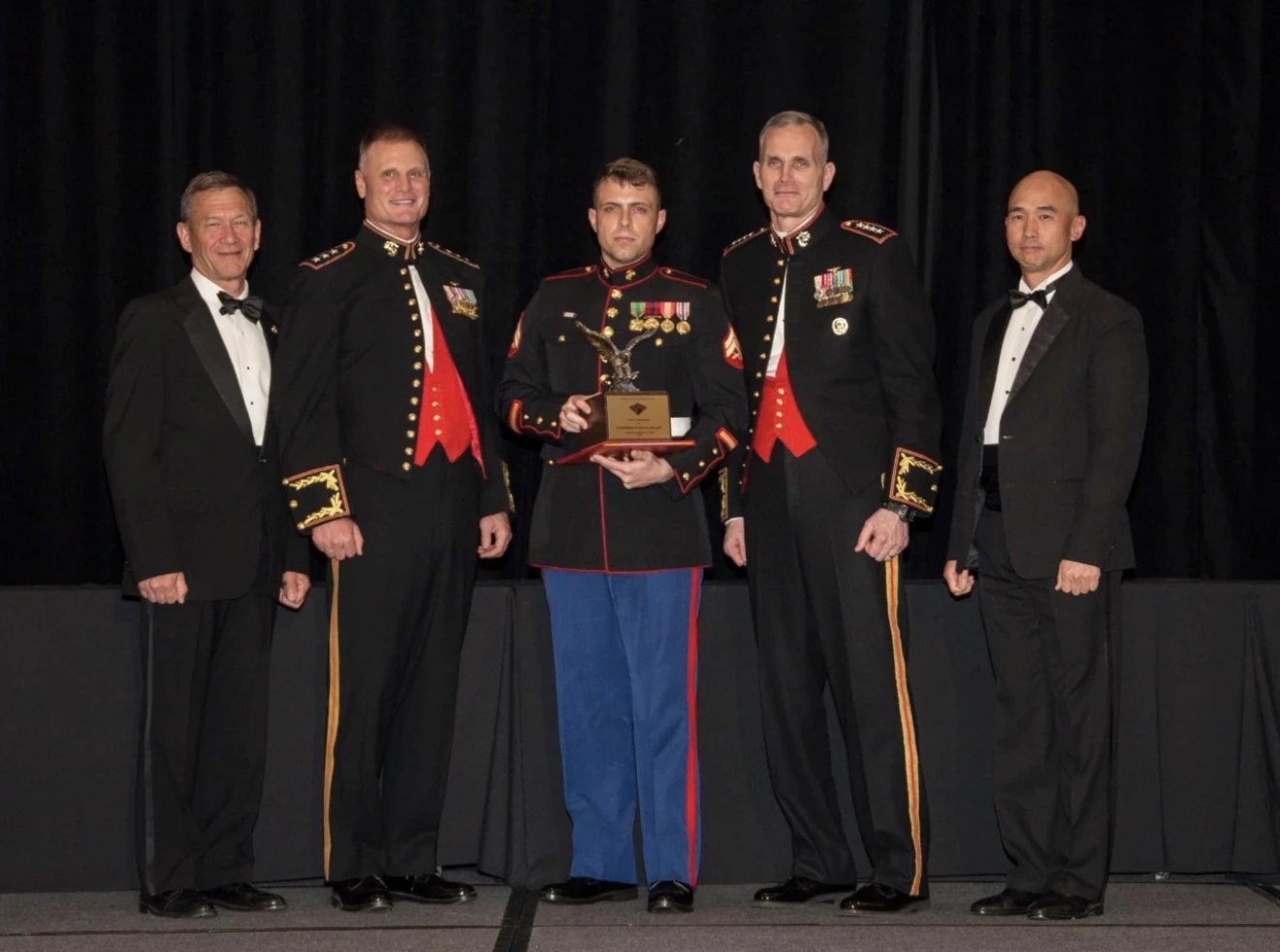
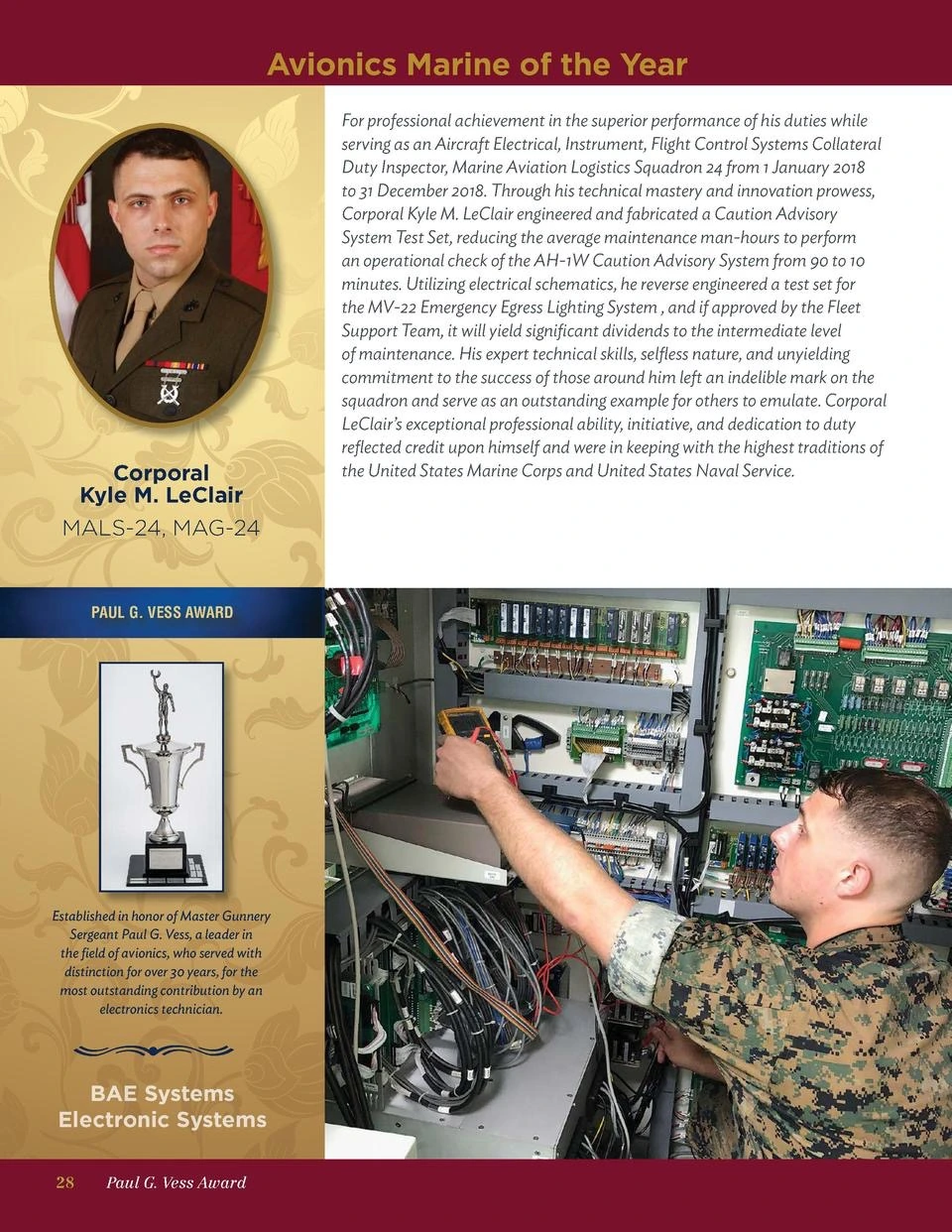
In 2019, the Marine Corps Aviation Association selected me as its Avionics Marine of the Year, an award given to one Marine each year. I earned it for my 2018 work as an avionics technician and Collateral Duty Inspector with Marine Aviation Logistics Squadron 24 in Kāneʻohe Bay, Hawaiʻi.
What the award recognized
As a Corporal at MALS-24, I had two responsibilities that shaped each other. I repaired aircraft electronics, and as a Collateral Duty Inspector I reviewed work that other Marines would sign off and return to service. Both roles brought me to the same question: when a technician believed a repair was complete, what evidence could they obtain at the bench? Sometimes the shop needed a better test. Sometimes the instrument used to make that decision needed repair itself.
I studied circuit design independently so I could address both problems. Building an instrument required a different kind of understanding from operating it. I had to decide what the technician needed to command, what response would be meaningful, and how to make the check repeatable in someone else’s hands. The AH-1W caution advisory and MV-22 emergency lighting instruments were two products of that work. The nomination also described the breadth of my responsibilities across test-station restoration, quality assurance, and the squadron’s early additive manufacturing effort.
Mentoring was part of the engineering work. I assisted technicians investigating faults, inspected their completed work, and became an instructor in a fabrication discipline I had first entered as a trainee. Each role asked something different of me: to reach a sound technical conclusion myself, to explain how another Marine could reach it, and to take responsibility for the quality of the result.
When I received the Paul G. Vess Award in 2019, I was already serving as the Noncommissioned Officer in Charge for additive manufacturing. The curriculum I developed to teach Marines how to fabricate and inspect parts helped lay the groundwork for the Marine Innovation Unit.
Bringing the operational check to the bench
My avionics training taught me how to find a fault in aircraft equipment. At MALS-24, I began studying circuit design on my own so I could also build the equipment we needed to test a repair. The AH-1W Caution Advisory System gave me a reason to put that study to work. Even after a repair was complete, its operational check occupied a technician for an average of 90 minutes.
I worked from the aircraft wiring schematics and built the first test set with spare switches, wire, and a plastic enclosure. I developed a bench interface that let the technician select an individual caution or advisory and verify the master light, audible alarm, and pilot test function.
With the test set, the average check took 10 minutes. The wider repair and replenishment cycle for these assets fell from 28 days to 17 days. The first saving freed the technician for other work. The second meant a serviceable assembly could go back into supply 11 days sooner.
Restoring the shop’s test equipment
I returned the Eclypse ESATS to service, restoring the shop’s ability to perform automated checks on CH-53 and H-60 avionics.
On the Aircraft Engine Components Test Stand, schematics and the equipment’s theory of operation were available. I used both to troubleshoot and repair the stand. Returning the stand to service restored local support for eight generator and drive configurations and allowed the squadron to complete a pending configuration update without an on-site civilian technical representative.
Eclypse ESATS restoration · Engine component test stand restoration
Designing equipment for a specific maintenance need
A UH-1Y governor adjustment panel needed an operational check before it could return to service. I designed and fabricated a bench interface that provided the positive and negative supply rails the panel required. The check supported the squadron’s repair and helped return the aircraft to full mission-capable status.
For the MV-22 Emergency Egress Lighting System, the shop had no local means to check the assembly. I designed a charger/analyzer with two custom circuit boards. It charged the assembly’s internal NiCd batteries with automatic cutoff and let the technician verify the inhibit response and check the NVG and white-light outputs independently. One of those boards was my first professionally fabricated PCB. At the close of the 2018 award period, the Fleet Support Team was reviewing the design. Its subsequent approval made the check possible at the intermediate maintenance level.
Governor panel diagnostic interface · Emergency egress lighting test set
Technical responsibility as a Corporal
As a Corporal, I earned the shop’s confidence on assignments that ordinarily called for a more experienced technician. I could pursue an unfamiliar fault independently. As a Collateral Duty Inspector, I also had to judge whether a completed repair satisfied its maintenance requirements. That responsibility shaped how I designed test equipment. At the bench I could follow a signal myself and decide what to measure next. A test set had to give another technician a dependable way to make that same determination. Several aviation test sets I developed went through engineering review by the Naval Air Systems Command Fleet Support Team at Miramar. Approved equipment was subsequently produced and distributed to maintenance activities across the Marine Corps.
Building a capability other Marines could carry forward
I was among MALS-24’s first additive manufacturing trainees. I learned to capture the geometry of a physical part with a 3D scanner and reconstruct it in SolidWorks. I returned to Hawaiʻi to help establish the Marine Corps’ first additive manufacturing laboratory on the island and became an instructor in the program.
The aviation logistics innovation summit at MCAS New River and subsequent tactical fabrication training gave me a route into that work. During the broader tour, I prepared more than ten technical data packages for review by work centers and squadrons. A physical prototype could show a colleague what was possible. A technical package gave reviewers a design they could examine before deciding whether to authorize its use.
I also supported Headquarters Marine Corps Aviation Logistics by researching fabrication methods, introducing them into maintenance work, and refining how Marines used them. At MCAS Futenma, I established the Marine Corps’ first overseas aviation additive manufacturing work center. I wrote the operating procedures, inspection requirements, and training syllabus. Those records gave the next Marine a way to qualify on the equipment and take responsibility for the work.
Expeditionary Additive Manufacturing Work Centers · Deployable Innovation Centers
Letters of Appreciation
- General Robert B. Neller, Commandant of the Marine Corps
- Lieutenant General Steven R. Rudder, Deputy Commandant for Aviation
- Lieutenant General Michael G. Dana, Deputy Commandant for Installations and Logistics
My CV records these letters alongside my military decorations and state recognition.
Award presentation and citation
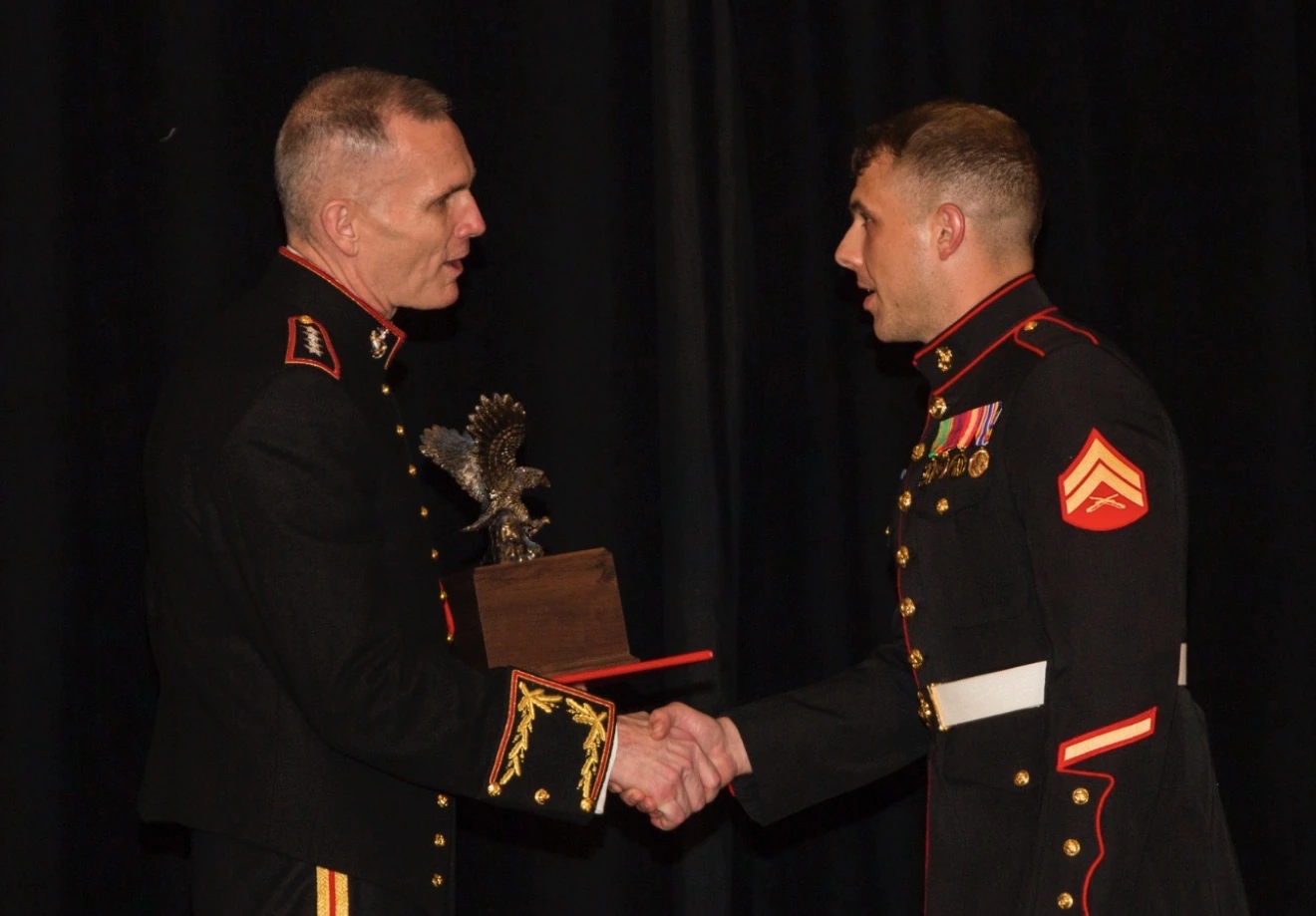
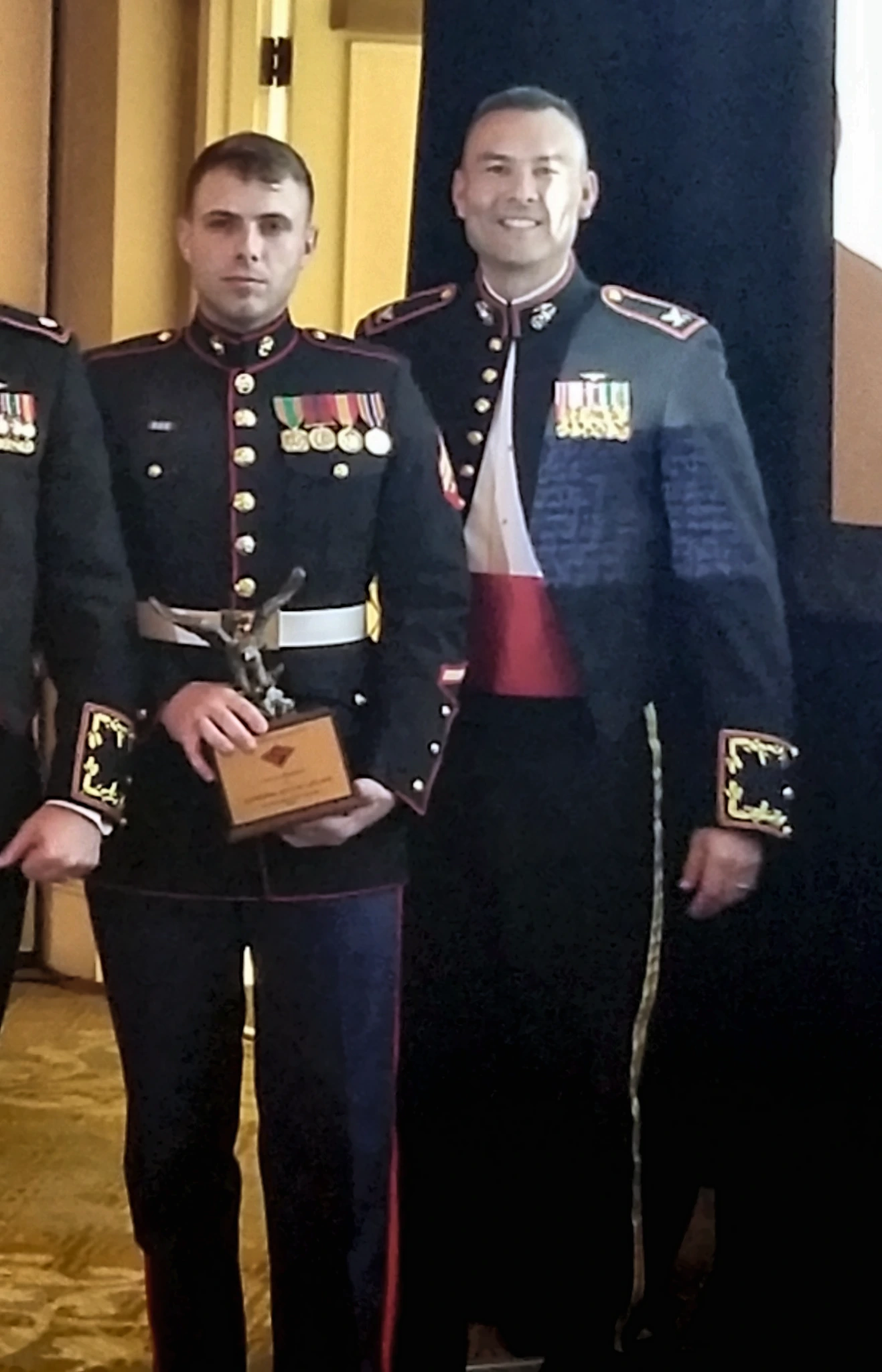
The Marine Corps Aviation Association established the award in honor of Master Gunnery Sergeant Paul G. Vess, an avionics leader who served for more than 30 years. The citation recognizes my service from January 1 through December 31, 2018, and singles out the AH-1W and MV-22 test sets.
Marine Corps coverage of the 2019 award · Professional experience · Awards and recognition in the CV