Expeditionary Additive Manufacturing Work Centers
Establishing an overseas aviation manufacturing capability at MCAS Futenma
Manufacturing Science & Quality Engineering
- Organization
- United States Marine Corps
- Location
- MCAS Futenma, Okinawa, Japan
- Development period
- 2018–2019
- Assignment
- Marine Aviation Logistics Squadron 36, 1st Marine Aircraft Wing
- Role
- Additive Manufacturing Program Lead / NCOIC
Overview
At Marine Corps Air Station Futenma, Okinawa, I established the Marine Corps’ first overseas aviation additive manufacturing work center. The effort brought local design, reverse engineering, fabrication, and technical instruction into a forward-deployed aviation maintenance environment, creating a practical foundation for manufacturing support within the Pacific.
My work combined the development of the physical workspace with the procedures, training syllabi, personnel qualification requirements, inspection controls, and technical documentation needed to operate it. I also delivered a class to the Commanding General of the 1st Marine Aircraft Wing and his staff, presenting the developing capability directly to wing leadership.
What made the work center useful was the connection between a physical part and its record. A maintainer could describe a problem, a designer could capture the relevant geometry, and another Marine could inspect the result against the same intent. The printers were one element in that sequence.
Operational problem
Aviation maintenance in a forward-deployed setting must address equipment needs while working within available facilities, local resources, and supply arrangements. A missing tool, an awkward maintenance interface, or a component awaiting an approved replacement can create a need for local technical problem-solving.
The engineering question was how to establish a manufacturing capability near the maintenance activity that could evaluate suitable requirements, develop physical solutions, and preserve the technical accountability expected in aviation. That required coordinated attention to equipment, workspace organization, design information, personnel development, and inspection.
For an overseas work center, the value of local fabrication is the ability to carry out suitable design and manufacturing tasks close to the people who understand the maintenance problem. Material availability, equipment capability, and the applicable engineering approval process remain part of the decision.
My role and program foundation
As Additive Manufacturing Program Lead and Noncommissioned Officer in Charge, I developed the procedures, instruction, qualification requirements, inspection controls, and manufacturing records that supported the equipment. My technical work included SolidWorks modeling, three-dimensional scanning, reverse engineering, and additive fabrication.
The Futenma effort built on my earlier participation in the Marine Aviation Logistics Squadron 24 (MALS-24) additive manufacturing program in Hawaiʻi, where I was an initial trainee and subsequently an instructor. That preparation included Headquarters Marine Corps Aviation Logistics training, Naval Surface Warfare Center Indian Head activities, and Tactical Fabrication training. I also assisted in establishing the first Marine Corps additive manufacturing laboratory at Marine Corps Base Hawaii.
Within the associated MALS-24 Work Center 550 effort, I developed more than ten technical data packages for work centers and Marine Aircraft Group 24 squadrons. This work provided experience in translating a practical maintenance need into a documented design and manufacturing proposal. At Futenma, I drew on that experience when establishing a new work center with Marine Aviation Logistics Squadron 36 (MALS-36).
Developing the mobile-facility workspace
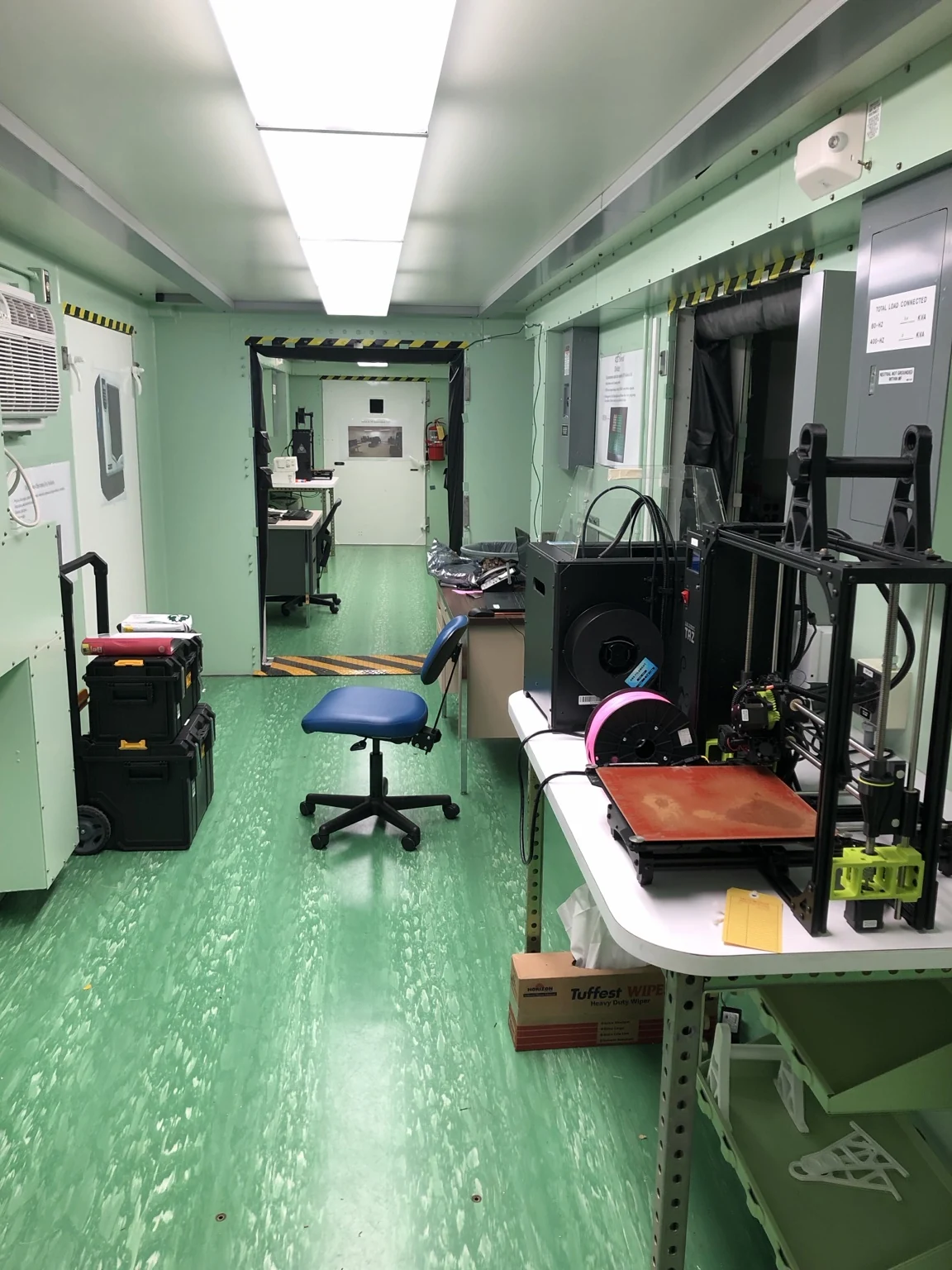
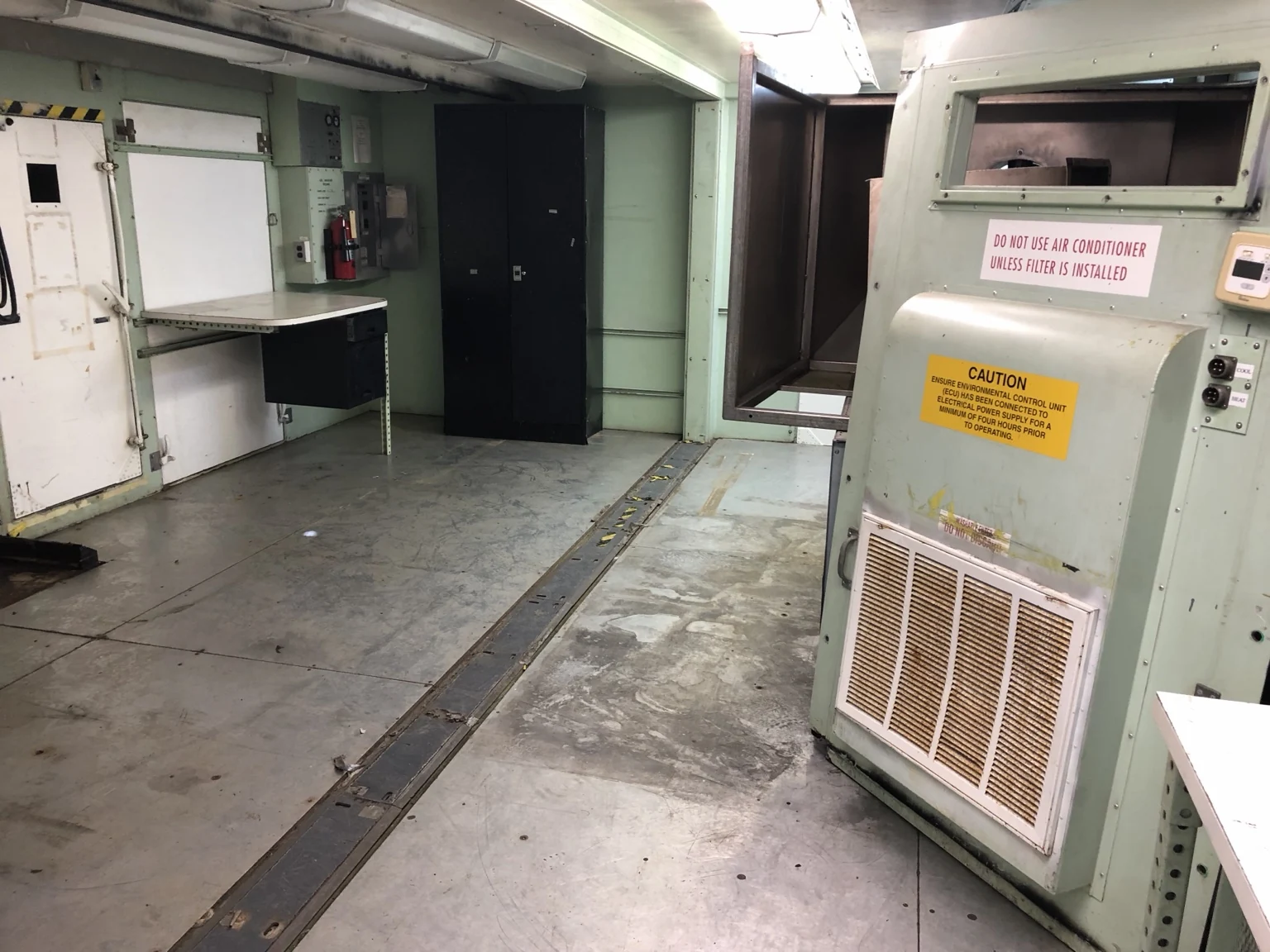
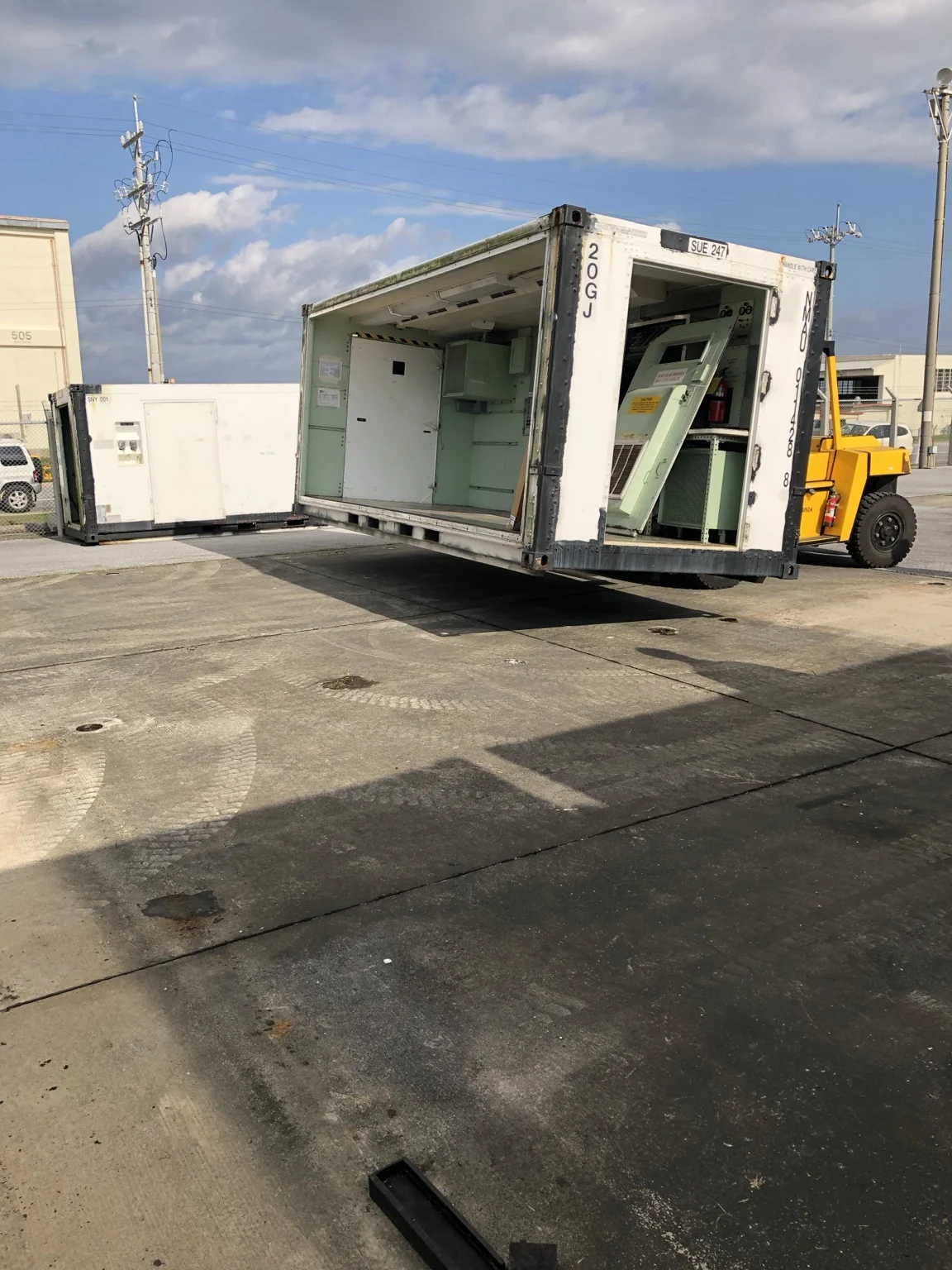
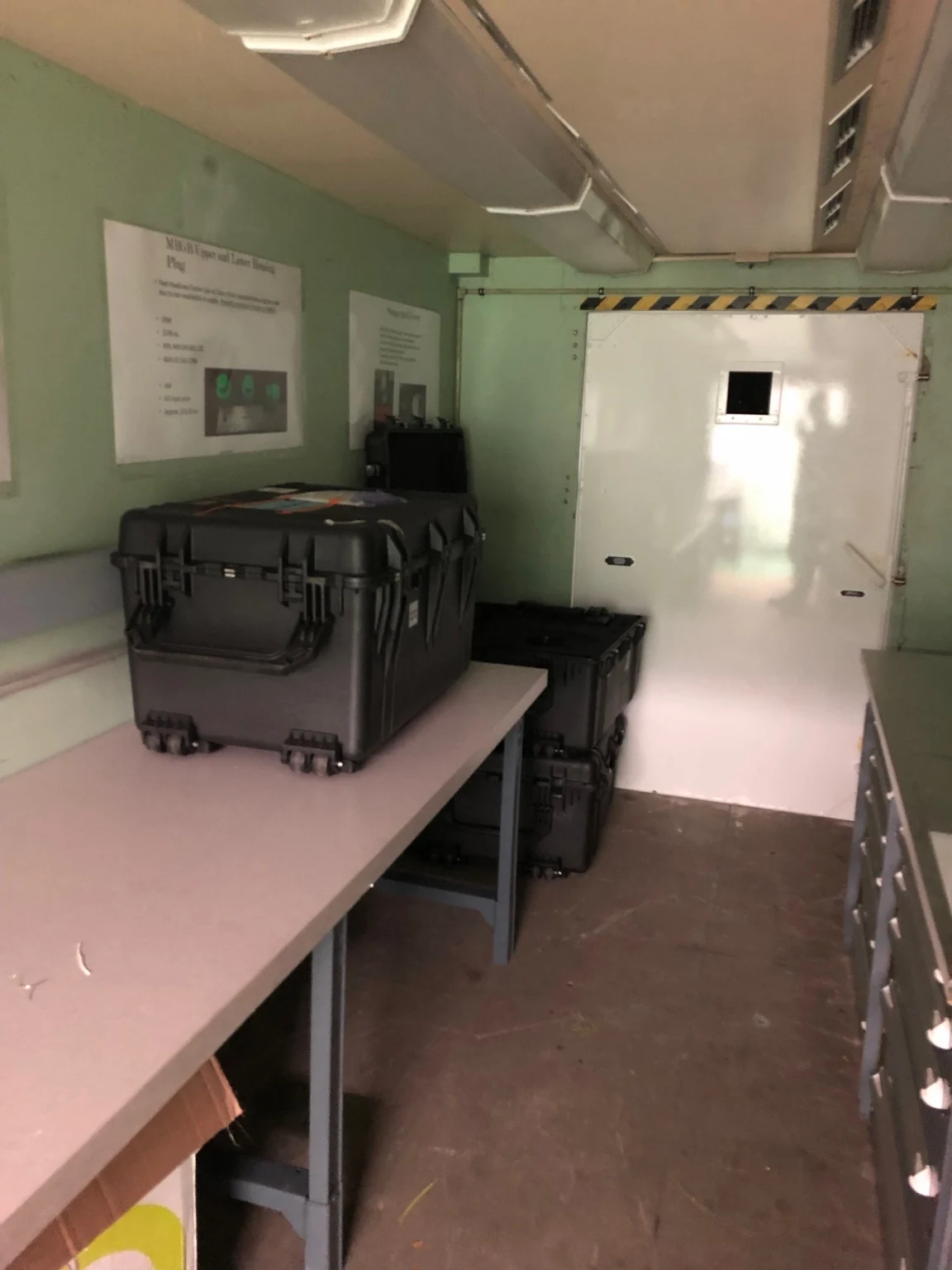
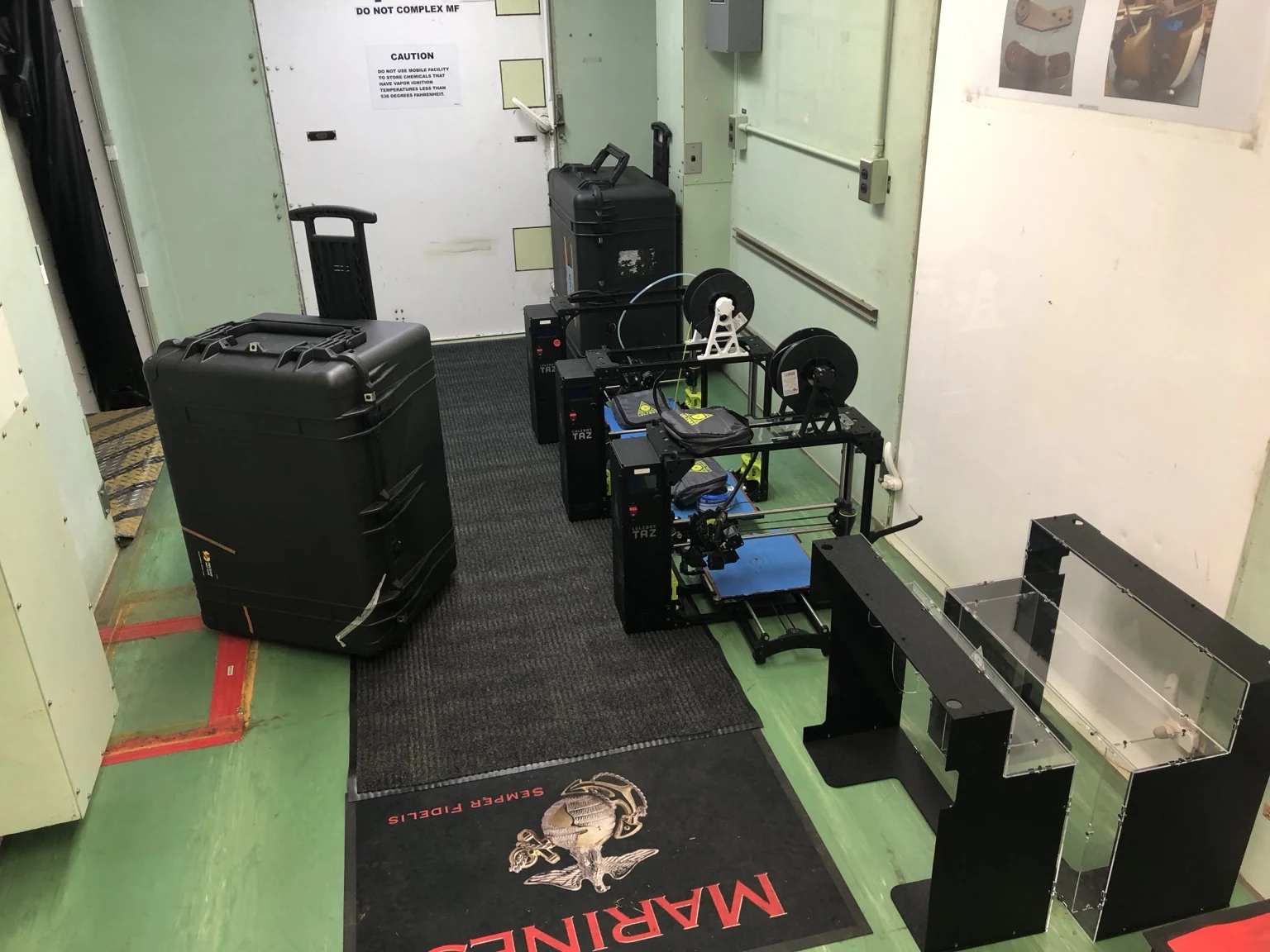
The Futenma work center took shape within connected mobile-facility shelters. The development photographs document shelter handling, open work areas, equipment staging, and the arrangement of fabrication and instruction spaces.
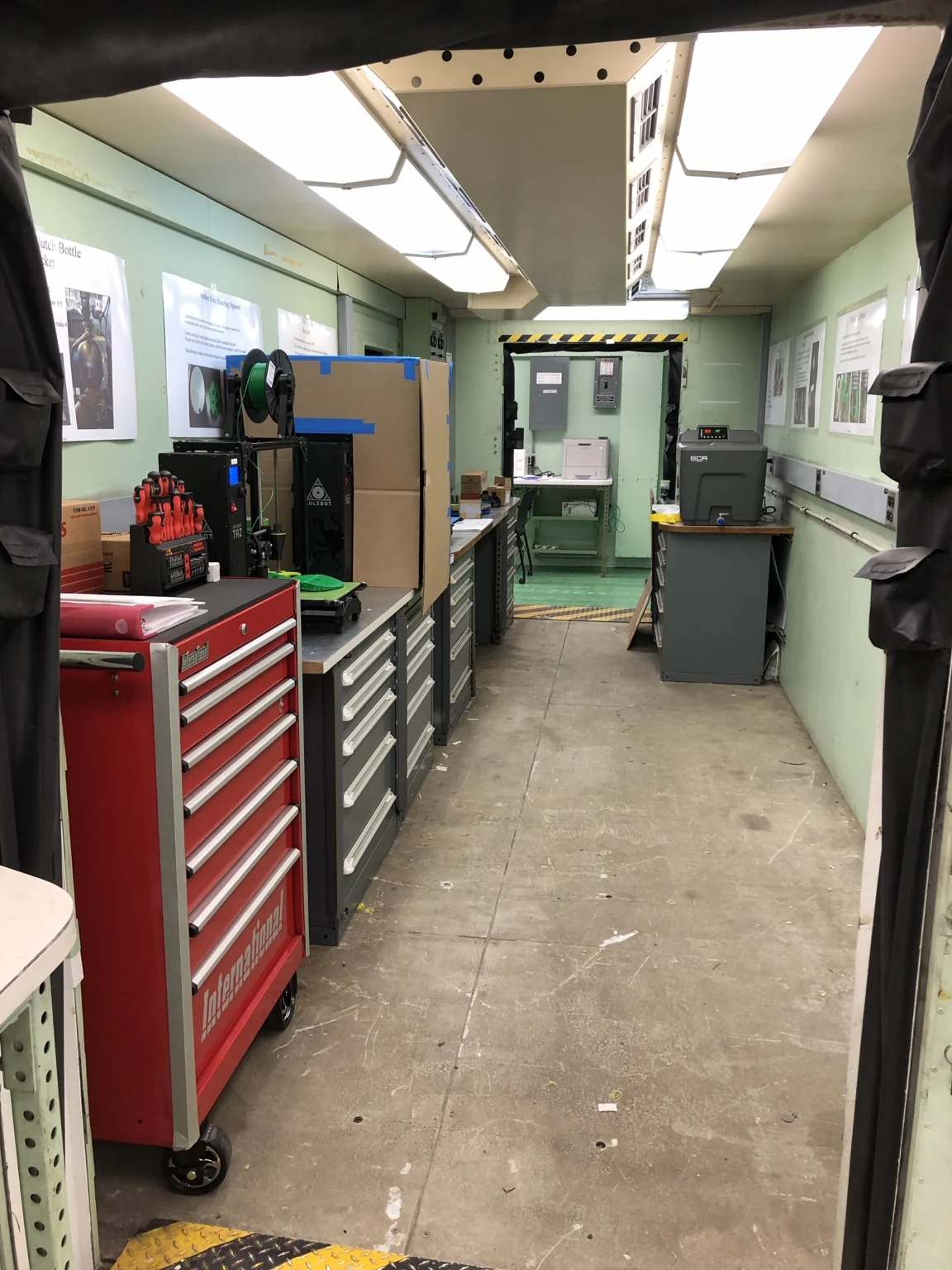
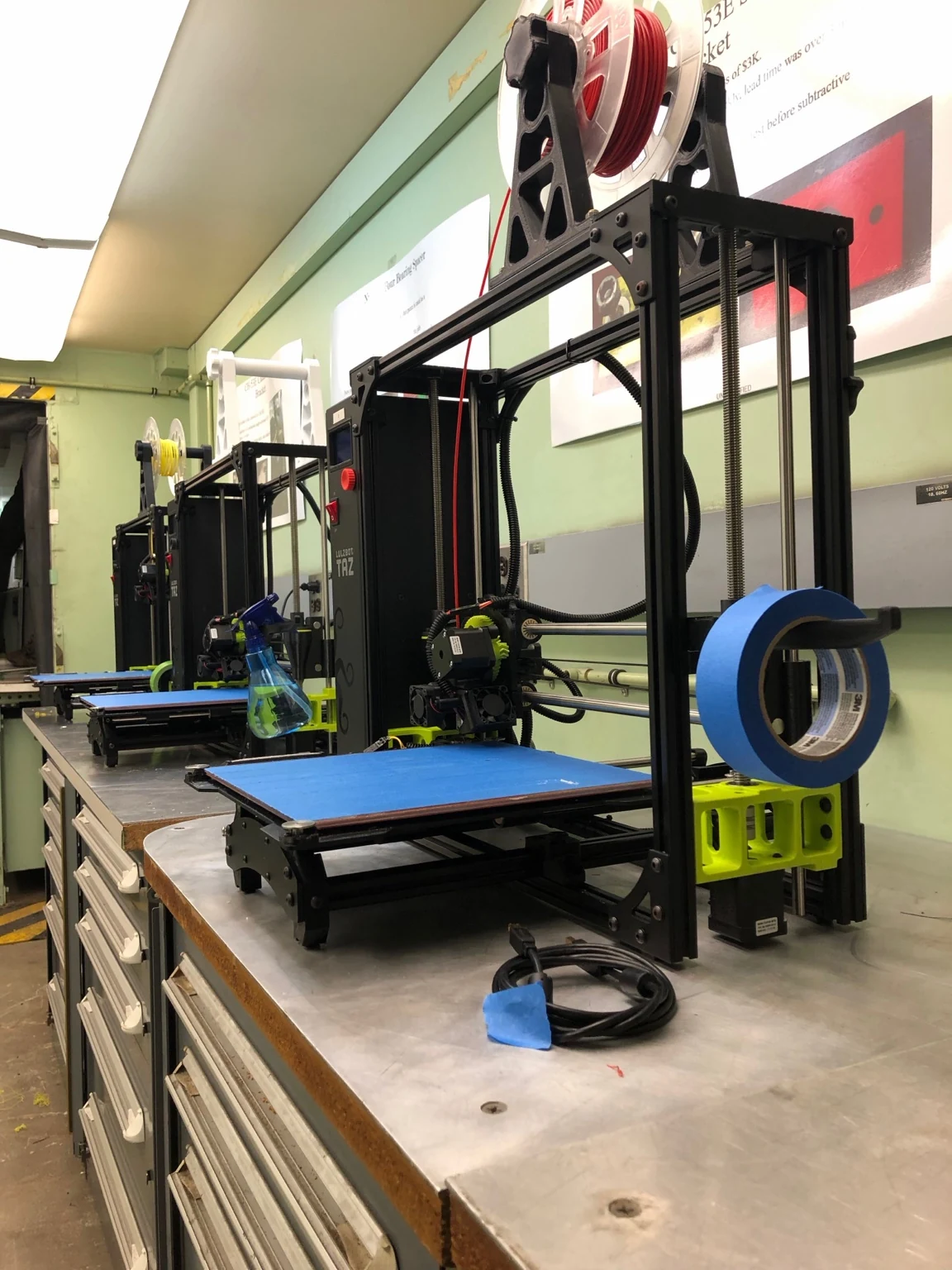
Within the constrained footprint, printers, workbenches, tool drawers, protective cases, computers, and shared work surfaces had to coexist with circulation routes and the shelters’ existing infrastructure. The resulting arrangement brought digital preparation and fabrication into adjoining spaces, with storage and tools close to the work.
This was a facility-integration problem as well as a manufacturing task. Equipment placement affects operator access, material handling, maintenance access, and the ability to observe a build. Transport cases and storage affect how equipment can be organized and moved. Electrical services, environmental conditions, and the space occupied by operating machinery must be considered together when a compact shelter becomes a technical work center.
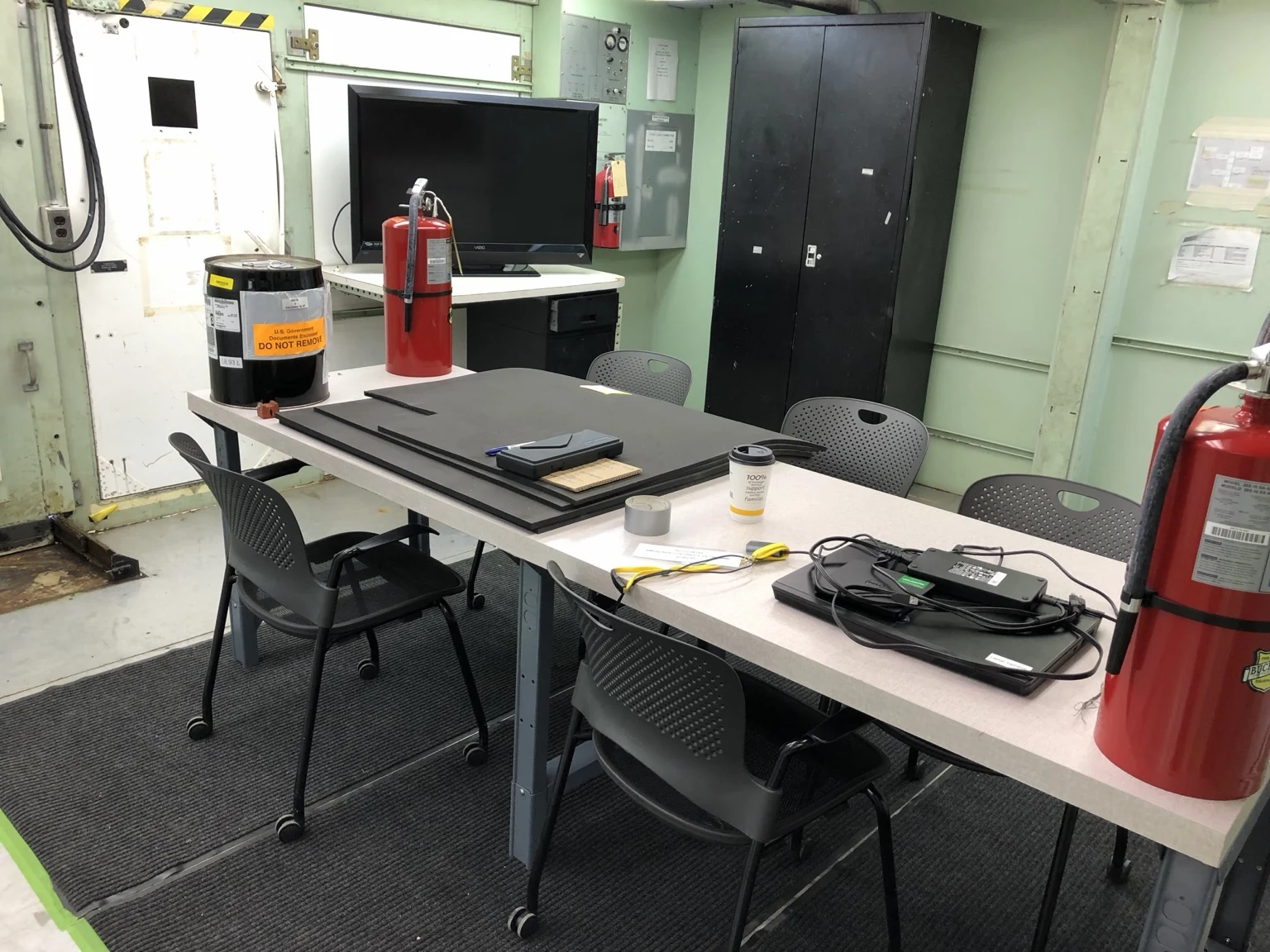
The photographs show those constraints at bench level. In the fabrication aisle, drawer storage keeps hand tools within reach while leaving the circulation route open. In the adjoining compartment, a shared table provides space for a computer, project materials, and discussion. Together these spaces support two different tasks within the same shelter footprint. One is preparing work that can be changed on screen. The other is evaluating a build that occupies physical space.
Connecting design, fabrication, and inspection
The technical work connected physical requirements with digital models and manufactured output. A three-dimensional scan captures the accessible surface of an object. The designer still has to determine which surfaces locate the part, where clearance matters, and what geometry belongs in the SolidWorks model. That interpretation helps define what to examine after fabrication. A recognizable external shape alone tells the inspector little about a mating interface.
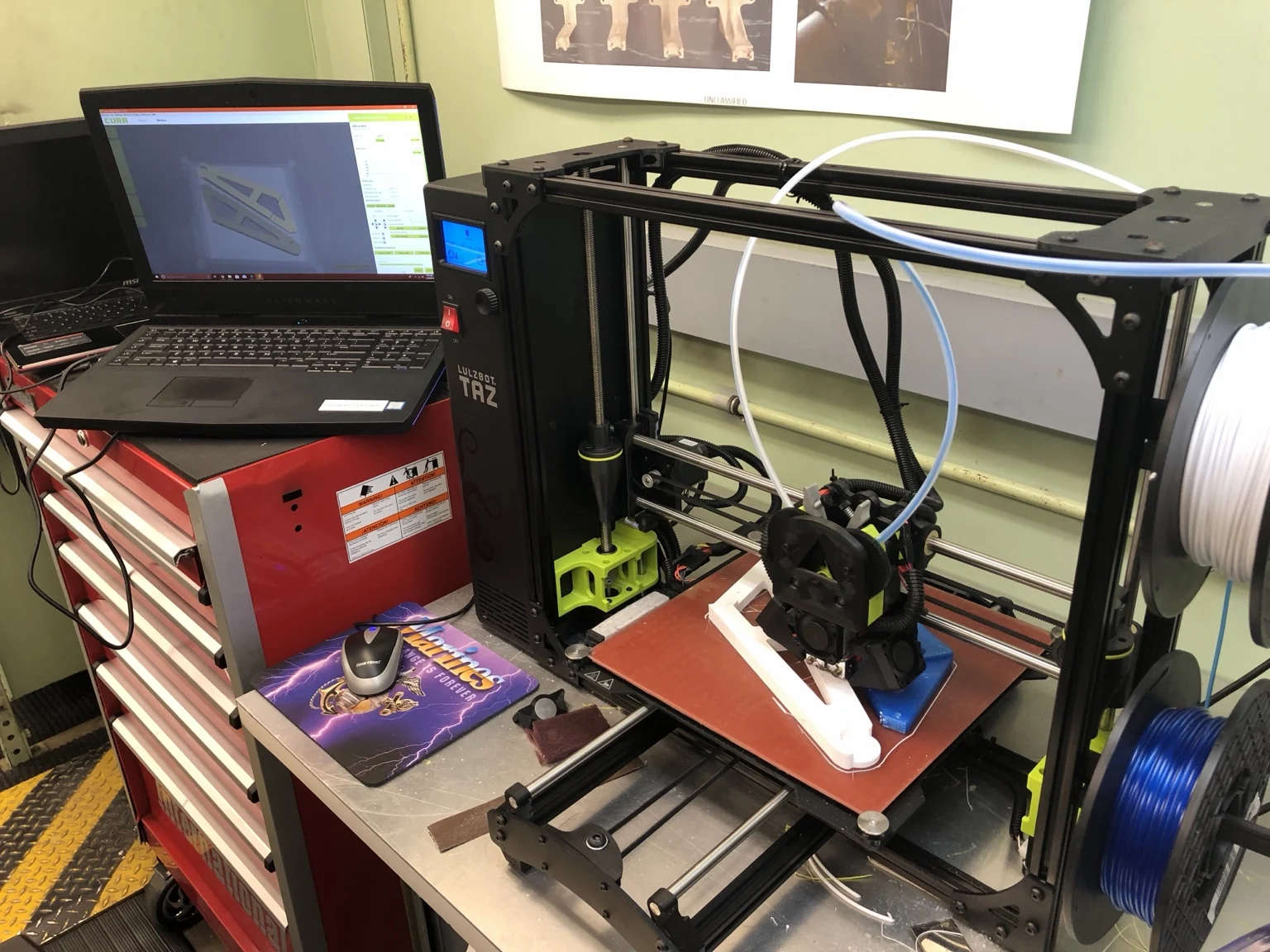
The photograph of Cura beside a LulzBot TAZ printer captures the next transition. At the computer, a model becomes a set of instructions for the build. At the printer, the result can be handled and examined. The model, the manufacturing setup, and the finished item answer different questions. Keeping them associated gives the next person a basis for evaluating a discrepancy and deciding whether the design or the build needs attention.
The same maintenance requirement runs through each activity in the work center.
| Activity | Engineering purpose |
|---|---|
| Define the maintenance need | Establish the intended function, physical interfaces, and suitability of a local manufacturing approach. |
| Develop the geometry and technical record | Use modeling, measurement, and reverse engineering to describe the proposed item and preserve its design basis. |
| Prepare and fabricate | Relate the model to the selected equipment, material, build setup, and documented manufacturing method. |
| Inspect and evaluate | Examine the result against the intended geometry and use. Identify issues requiring correction or further review. |
| Retain instructions and train personnel | Make the method understandable, repeatable, and transferable within the work center. |
For aircraft applications, fabrication capability and authorization for use are separate requirements. In a separate 2018 project reported by Naval Air Systems Command (NAVAIR), the T-6B team modeled and scanned a component, tested prototypes, developed the engineering data package, and secured installation approval. That distinction explains why technical documentation, qualified personnel, and inspection discipline belonged at the center of an aviation manufacturing capability. 1
Technical instruction and command engagement
As part of this effort, I delivered a class to the Commanding General of the 1st Marine Aircraft Wing and his staff. The engagement brought the capability directly before wing leadership and formed part of my broader work translating manufacturing technology into practical understanding.
At the work-center level, I developed training syllabi and personnel qualification requirements alongside operating procedures and inspection controls. Instruction supported the transfer of technical knowledge to other Marines, while written requirements established a common basis for how the work should be performed and evaluated. A syllabus gives an instructor a sequence to teach. Qualification requirements identify what a Marine must demonstrate, and inspection controls give the person evaluating the work a common basis for making a decision. Together, those documents let the capability pass from the person who established the work center to the people responsible for its next job.
Significance for aviation support in the Pacific
The principal contribution was an overseas aviation work center with the equipment and technical framework to support local manufacturing activity. Locating design work and fabrication near maintainers creates opportunities for direct feedback, physical evaluation, and revision without moving every iteration between distant organizations.
For suitable requirements, this arrangement can add a local source of tooling, prototypes, and manufacturing support. Its value depends on selecting appropriate applications and maintaining the engineering review needed for aviation use. The Pacific significance lies in bringing those capabilities closer to the point of need and developing Marines who could continue applying them.
Subsequent 1st Marine Aircraft Wing reporting in April 2020 documented MALS-36’s additive manufacturing workspace at MCAS Futenma, describing its established aviation-maintenance role and its adaptation to produce protective-equipment components. That later reporting provides a public record of the continuing institutional use of aviation additive manufacturing at Futenma. 2
Recognition
I received the Navy and Marine Corps Achievement Medal for establishing additive manufacturing capability within MALS-36 at MCAS Futenma. My broader Marine aviation work was also recognized with the 2019 Paul G. Vess Award as the Marine Corps Avionics Marine of the Year. Official Marine Corps coverage of that award emphasized technical problem-solving, aircraft readiness, and mentorship. 3
Development photographs
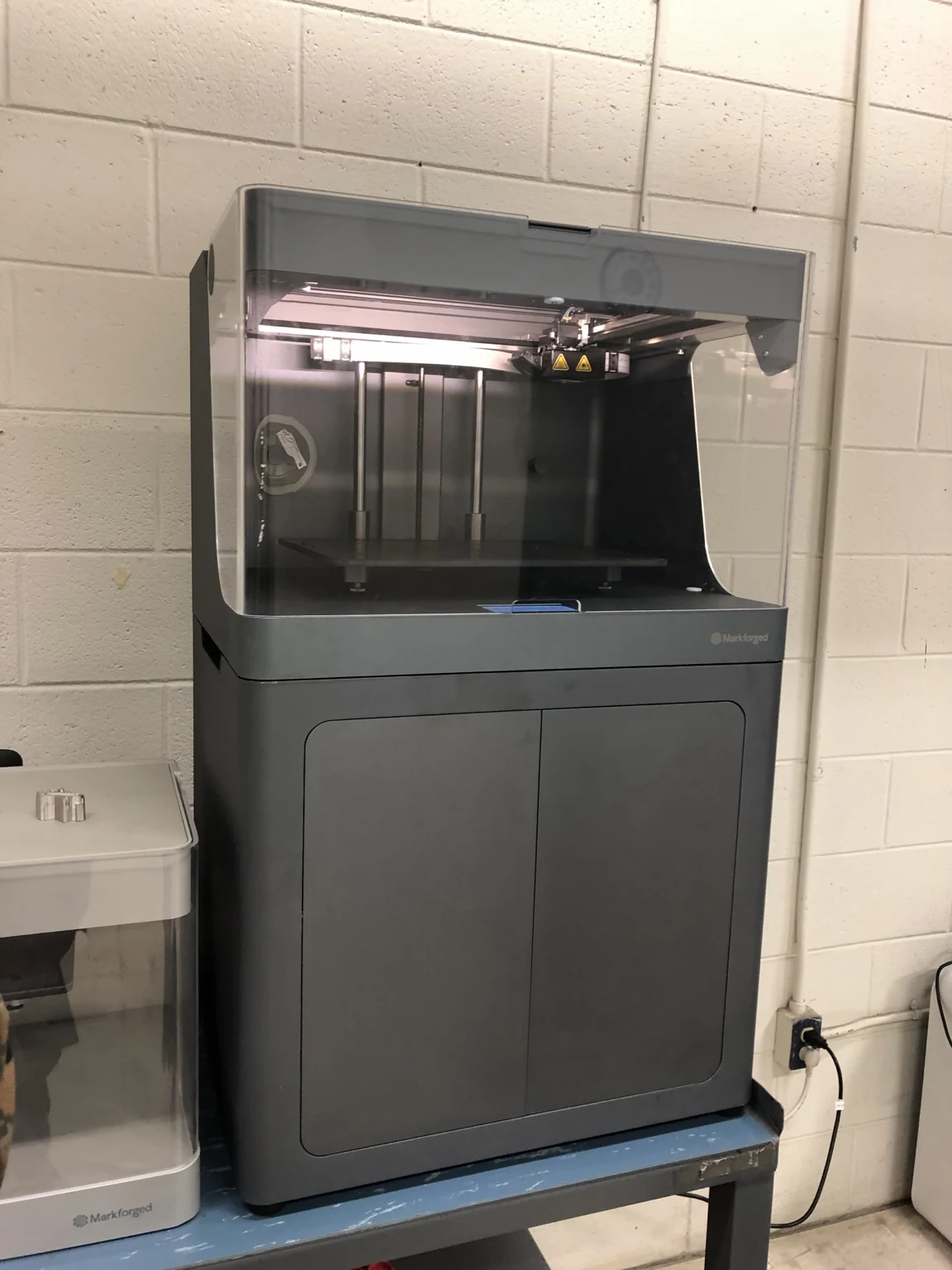
These photographs document the work center’s earliest stages, including mobile-facility preparation, equipment integration, workspace arrangement, and initial fabrication activity. They provide a visual record of how the capability was developed within the available facilities.
References
- Naval Air Systems Command. AM, collaboration keep T-6Bs flying. September 28, 2018.
- 1st Marine Aircraft Wing. Running 24/7, and limited only by imagination: U.S. Marines put 3D printing skills to use in the fight against COVID-19. April 8, 2020.
- III Marine Expeditionary Force. U.S. Marine Cpl. LeClair awarded Avionics Marine of the Year. May 23, 2019.
Technical areas
Manufacturing engineering, CAD and reverse engineering, expeditionary facilities, technical documentation, inspection, and instruction.